Blog

  • Nyriagongo Crater and the earth’s entrails

    Nyriagongo Crater, Nord Kivu, DRC, 31.10.14

    An year passed by without writing. The perfect occasion to start again is the scientific expedition to the Nyriagongo, organized by the Observatoire Volcanologique de Goma in collaboration with Università di Palermo, Istituto Nazionale di Geofisica e Vulcanologia e Haidelberg University, for which I was luckily recruited as porter and helper. Indeed my recruitment has been possible thanks to Dario, a volcanologist who has been active in DRC for the last 20 years and who had the “chance” to fell on my insisting requests to go up the volcano and be part of the team.

    Some few words to summarize this year before starting with the adventure’s tale.

    This year passed by very quickly due to its special encounter brought by the wild wind, travels and the load of work.

    DR Congo was probably the last place in Africa among AVSI’s missions I was still very curious of experiencing. So much has been told about this country and so many controversies I heard about its tragedies that I felt it would have been a capital experience for me to better understand this continent paradoxes.

    Even Che Guevara after having visited different countries in Africa decided to try to support the Congo as he wrote: “Our view is that the Congo problem was a world problem” he thought victory (as defeat) in this country would have had global or at least strong regional repercussions. Unfortunately he left the country after seven months malnourished and demotivated starting is diary with this quote on his journal: “This is the history of a failure”.

    This mail is certainly not the proper place to explain why DR Congo still struggle behind while most of its southern and eastern neighbors grow in wealth and stability. The only thing I want to stress here is that too much simplifications were reported on this country – Rwandan genocide heritage, blood minerals, ethnic wars, lack of state, geopolitical interests – I do not want to be a vehicle of these simplifications and my opinion at this point is definitely still under construction.

    The predominant feeling is that this country, the size of Western Europe, is suffering from a thousands of wars within wars, based on historical ethnic conflicts exploited by third-class leaders who too easily sold their ideas to the tempting offers of regional policy makers. This complexity needs much listening and reflections and maybe next time I will be better positioned to provide you with stronger opinions on the Eastern Congo never ending problem. Currently I believe that a wrist like the one of the late Melas Zenawi from Ethiopia, Museveni in Uganda or the neighboring Kagame might be the only solutions to this complexity.

    I had the chance to spend this full week in the Nyrigongo crater thanks to a fortunate combination of events that led me to stop working with AVSI and to start working with UNICEF. It was no secret that operations management became a bit repetitive to me, despite the fun I had and the precious teaching I could draw from it. I thus apply for a monitoring specialist position that is supposed to evaluate and of course monitor a big cash transfer scheme called ARCC – Alternative Response for Communities in Crisis – which serves some 22,000 HH with different installments methods, mixing cash transfer with humanitarian fairs approach according to the different implementing partners involved. My starting date is Monday the 3rd of November and I could not be more impatient to put my hands on the database to find out interesting patterns and hopefully judge with solid evidence this program. So this week was my holiday in between two jobs.

    The last week was devoted to some few preparatory meetings with Dario, my good friend FrancescoD who was also recruited like me to support the volcanologists and the rest of the team who came on October 22nd : Giovanni, Nicole, Sergio, Sarah and another FrancescoP who was the rope and wall equipment specialist together with Giovanni, thus the people I work and had the most fun with while helping providing the rest of the team the material to go up and down the three different terraces of the crater.

    We calculated the expedition would have needed Fourty-seven porters, each carrying 15 Kgs all the way up from Kibati village (1984 masl) to the summit (3470 masl) where we have placed our base camp, with a main tent, used as warehouse, kitchen and living-room, as well as our four sleeping tents.

    The way up a group of friends from Goma also accompanied us since it was the re-opening day of the volcano for tourists and thus a long caravan was going up the Nyriagongo on the morning of October 25th. As it often happen in the rainy season after 11am the rains hit us strongly and we reached the cold high lands rather wet.

    While climbing we were distracted from the lowering temperature by the view over Goma, lake Kivu, the Rwandan hills and the rest of the volcano-mountains around us, which was simply gorgeous. The land below us was an open book for Dario and the scientists we accompanied, me and FrancescoD listened curiously while they where showing us craters and cracks, living marks of previous eruptions from 1977 and 2002.

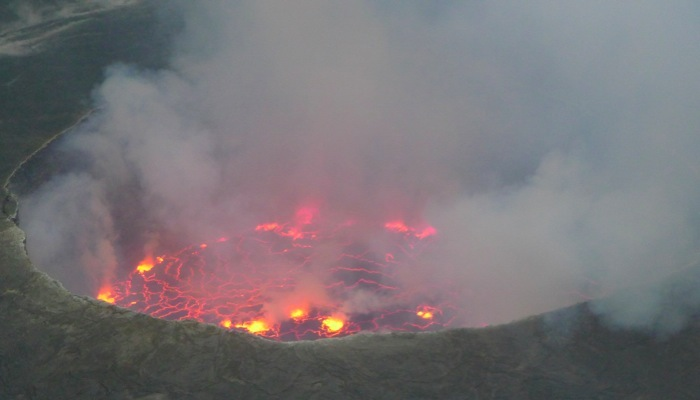
    The first sight of the Nyriagongo’s lava lake, the biggest in the world, could be easily summarized by the scene of Frodo Baggings having the first contact with the burning eye of Sauron in the land of Mordor from The Lord of the Rings.

    It was still hid in mist when I set foot on the summit, as if this powerful living thing wanted to reveal himself in a more dramatic way. I honestly could not remove my eyes from the centre of the crater where an incredible noise of raging sea within a tempest was coming from. Few seconds later the mist protecting that scary view eased a bit its veils and I could not believe the gorgeous horror and the incandescent turmoil just 400 m below us. This was the first time during the expedition that I had the feeling of looking into something so exceptionally powerful, beautiful and at the same time horrendous which could have only been a product of dream.

    Watching it in company made it a less dramatic experience but more enjoyable and interesting, each of us who never saw such a thing before was in a grateful sense of wonder.

    The camp was already set by the first comers and thus me and FrancescoD started helping with unpacking and the kitchen work by warming up a nice cup of tea for everybody.  Charlie, an american friend who came as colleague of Dario made the tea special thanks to a nice sip of Johnny Walker.

    The evening passed by very quickly while FrancescoP, Giovanni and Dario told us the logistic plan for the following days in shady candlelight in the main tent, we all quickly went in our sleeping bags looking for the warm we left at the feet of the mountain.

    We woke up from our small tent in a bright morning overlooking the lake and the two giants next to us Mt. Karisimbi and Mt. Mikeno, former volcanos now inactive.

    Breakfast was a discover to some of us, when I offered some Odii, the sim sim and g-nut paste that my dear friend David regularly send me from Northern Uganda courtesy of his mum. A delicious caloric bomb which we spread over bread and biscuits. So we were ready to start work, Nicole, Sergio and Sara started walking westward on the rim to place their sophisticated machine to collect samples of rain, gas, plants and spectrum of lights, Giovanni and FrancescoP expert speleologists where getting ready to equip the wall down from the rim to the first terrace, me and FrancescoD started preparing the material to be brought to the advanced (lower) camp to the second terrace of the crater.

    Around 9.30 am I was called for my first trip down the first terrace of the crater, to carry down the rope which would have served to descend down on the second terrace. Excited like a child waking up on Christmas day, I quickly learned from FrancescoP the use of the few new tools that speleology (or the art of descending and eventually ascend) does not have in common with alpinism (or the art of ascending and eventually descend) which I know rather better. The smokes of carbon dioxide mixed with sulfur were definitely not nice to breath and indeed my throat, unused to such an experience started burning at a surprising speed, the pungent smell of such smokes and the way they limited my visibility added mystery and suspense to my descent. A thought went to Otto Lidenbrock, the protagonist of Journey to the centre of the earth by Jules Verne.

    When I detached myself from the rope to rejoin Giovanni and FrancescoP I had again that feeling of incredulity vis-a-vis the place where i set foot on. A huge terrace full of rocky landslides, two big cameras left by belgians researchers to monitor the lake, and some 200 m of rope, abandoned recklessly by the above mentioned belgians, which we decided to use as pulley to bring down to the second terrace the different materials required for the lower camp.

    FrancescoP started its descent to the second terrace with some good kgs of rope on him when, a single heavy drop of rain fell, between me and Giovanni. The idea of getting soaked made our sight terrified and so after telling FrancescoP to hurry up (poor him, he had some good 20 vertical m to climb up), we started running towards the rope which led to the rim. Despite the speed the rain started pouring down and the wrath of the hailstorm hit us badly. Ice and water were felling like cascade from the walls we were climbing and so the work was declared close for the day. I found my dear iPhone in a little pool of water inside a bag I was carrying. The poor device is now undergoing the rice immersion ritual to get dry under suggestion of FrancescoD and Sergio.

    The evening passed by swiftly with pleasant chats and jokes typical of people under a common tent. The following day we would have gone down to set up the lower camp, very early in order to avoid the downpours typical around 11am in the wet season.

    Me and FrancescoD woke up excited, and we did prepare all the material to be brought down the first terrace meanwhile Giovanni and FrancescoP equipped the pulley which would have eased the transport of goods at least from the first to the second terrace which was definitely more vertical than from the rim to the first terrace. Everything was ready, the Francescos, me and Dario would have spent the following nights down in the crater. With a couple of up and down from the rim everything was placed on the first terrace and transported down through the pulley to the second one, some 300m lower than the rim.

    When I set my feet on the second terrace, that feeling of incredulity for what i was seeing became stronger. Was I on Mars, on the moon or only day dreaming? Fumaroles connected with the lowest entrails of the earth following the circular path of the crater were producing a mystic mist, silent was all over a part from the vigorous screams of the restless lake. I felt humbled by the desertic beauty of the place and a feeling of gratitude filled me.

    The advanced camp was equipped on a beach of debris similar to sand. Dario proposed a walk around the terrace but it was only after ten steps that our plan for an hands on class on the volcano were ruined by the rain which came as much punctual as violent and pushed us back in our tents. The tents we used for the lower camp were cheap, single layer tents and water actually came in in plenty. Good enough the storm gave us some five minutes to fix them slightly better with tie-rod and with some extra cover left from Dario during his previous expedition in 2011.

    Finally we were allowed by the weather to enjoy our walk. A cyclic stormy wind accompanied us changing its blow from clockwise to counterclockwise every other quarter of an hour. Where we were having our promenade, in 2002 there was full of vegetation and indeed the few remaining woods were witnessing this tale of Dario. As the rain stopped, me and FrancescoD started pouring questions on the different stones we could see and on the few pioneering plants we found. We retained little of the amount of info which came from the two experts however I now know what leucine minerals are as well as the different between afirique and porfirique rocks. Also the interesting concept of dyke, or lava vertical intrusion remained in our thirsty brains.

    The wind was cold and strong and cooking outside made us freezing. We went on the edge of the terrace to contemplate the Eye-like Lake for a good half an hour and then we took refuge in our sleeping bags. The night inside the tents was definitely warmer maybe thanks to some hidden fumaroles under our tent. Me and Francesco thought to our beloved ones who could not have any information from us as even the sat phone was not working well down there. We both agreed on how beautiful it would have been to share with them such a wonder.

    Another exciting awakening came to be for the second day in the crater as we would have helped FrancescoP in the equipment of the last and most dangerous wall. While Dario was watching us from above, the FrancescoD and I under the clear direction of FrancescoP were fixing knots, cutting rope protection materials to protect our descent from the sharp rocky blades where the rope was resting.

    Around nine we were ready to finally get the closest we could go to that powerful living thing. The green-light from FrancescoP came via radio. It was only about 35 m overhanging descent and some 60 m on a big landslide and there we were welcomed on a place few human beings have ever set foot upon.

    A feeling of fear and reverence towards the power and beauty of nature quickly grew in me. For a moment I felt like a medieval man who fears a terrible punishment will fell on him if he dares to go and look into the lake from so close.

    Volcanic glass was all over creating gorgeous figures with its sharps shapes and a feeling of absolute wonder and incredulity to my own eyes when we reach the shore of the lake and looked down the dance of incandescents masses of melted rocks showing the grace with which their perimeter got incandescent and cooled down according to the convective movements which were ending up with outstanding bubbles with incredible sprinkles like fountains, red as red as you could only dare to imagine. The smoke and above all the hell like heat pushed us back every other minute when we dared to looked down at the eye.

    Tiles of volcanic glass and cracks full of sulfurous entertained us throughout the tour of this magic lake, the biggest of it kind all over the world.

    As soon as the time to go back to the second terrace got close, we wanted to avoid the 11am rains, I increased  the number of visit to the shore of the lake in the attempt to keep in my mind those unbelievably beautiful images, which no picture will ever describe.

    FrancescoP went up first to check on the rope protections and the lake roared when me and FrancescoD where still down. That was quite a push to hurry up! The 35 m down was rather easy but the way up. Gosh! I did not believe going up a rope could have been so exhausting and hard. A mixed of improper equipment and use of alpinistic technique rather then speleologique one, made me spend a good 25 minutes to reach the first resting place. Good enough the more experienced FrancescoP re briefed us on the spelologique technique 😉 and the rest of the way up was definitely easier.

    The afternoon passed between a class of geology and the contemplation of the lake and the measurement of the fumaroles temperature,rarely above a 100 Celsius which meant a lot of air infiltration and thus the impossibility of sampling significants data from there.

    The following morning we discovered Dario inherited some flies in his sleeping bag and thus had a terrible night. Me and francesco left very early around 5.45am in order to meet the descending team, Sergio, Sara and Giovanni to hand them over part of our equipment which they would have needed to come back from the third terrace.

    Quickly we reached the summit of the crater climbing up the last 200 m of rope on easy ledges. The team below had some issues with the climb up from the third terrace but the help of Giovanni and FrancescoP solved everything. Giovanni proved us to be a flying giant by reaching the base camp by lunchtime….

    On thursday me and FrancescoD went down again to help pulling the pulley to bring back up the material from the second terrace, we developed a cool technique with FrancescoP and D which allowed us to carry back up some 80 kg of goods. Also Dario made it safely up despite a carabiner which was discovered not to be properly hooked at his harness, he is definitely a representant of the good luck from Naples 😉

    The last night we were joyful and light-hearted. The samples collected by the scientists were solid, everybody made it safely up and down the crater and we had plenty of food thanks to the rigid regime promoted during the firsts days of the expedition. Jokes and tales were accompanied by delicious soups, melted chocolate married with dry fruits and a well deserved bottle of Ron Pampero anniversary whose content disappeared in a matter of instants.

    I could not avoid asking Denis, the most trustworthy porter that accompanied Dario in his last 20 years of samples collection on the volcano the meaning of Nyriagongo and Nyamulagira, the second much more active volcano few kms east to the one we were currently. Since the question was posed in front of everybody in the common tent he decided to give us two different answers, the first one suited the audience while the second one should have been told to me in private.

    Nyria is a possessive prefixes in the language of Kinyarwanda and Kinyabwisha, and Gongo means strenght, excellence, since the Nyriagongo is feminine it is clear that it referes to a mother that bears strength and excellence. Therefore we could refer to the Nyriagongo as the excellent mother of all mothers. On the other hand Nyamulagira means the one who look after the herd, it is masculine and is intended in the sense of a father protector of the people who live in the land at its feet. The two volcanos are a married couple linked by the fire of the earth’s entrails.

    At night I went with curious heart to Denis to find out the second explanation. Well that was a hot secret that I should not reveal to everybody, so those who are truly interested shall write me.

    A strong hug to each of you and a warm invitation to come visit me on the shore of lake Kivu and at the feet of the beauty that i just described.

    This land is full of wonders that you will discover if you pass by and pay a visit.

    Con affetto

    Gabri
  • End of the journey from Hurgada to Tel-Aviv

    Dear All,

    Almost two months have passed since I left the shores of the holy land, where I ended the travel with my motorbike. The time of the journey has gone faster than I could imagine and the unexpected was far more pleasurable than anyone could guess. It is now time to write about the last legs of my journey, in order to seal its real end.

    The most important destination of the trip was for me Jerusalem, there I sit in front of the Holy Sepulchre and felt that no step further should be taken. My heart was peaceful and content and all the images of my trip crossed my eyes. Here comes what was not yet written.

    I left Hurgada on Sunday early in the morning with Ahmed and two other friends dressed in their long traditional Djallaba, coming to say bye bye just before I could leave the key to the bakery next to Ragab’s barber shop. One of them, whose name I forgot was impatient of cutting the ritual greetings in order to say something important, I could tell this by his fast moving eyes and by the position of his arms, continuously changing. Finally with his hands clasped, he found relief from his mental burden and told me with a satisfied sight: “It is my duty to let you know that Islam is the only way which leads to the real truth, do not forget this if you want to be saved, hopefully one day you will put it in practice” the rest was nodding and patting his shoulder. 

    I smiled, very surprised about that statement. It was clear that I am a Christian and that I appreciate their friendship for the mutual exchange arising and not for any further interest. Why to say that? It really seemed as if they had to comply with an inner sense of duty. On the other hand I already surprised them enough by giving Ragab a cross as a present and by suggesting focusing their riots on their electoral rights to three more years of legislation rather then on the fact that Egypt is a Muslim country and thus Sharia should rule. That is why I thought smiling would be a proper behaviour before getting on my bike and kicking hard its engine.

    It took a good half an hour to pass over the various touristic resorts and then I was again in the desert. However the red sea was rather a good companion on the eastern side. The strength of the wind compelled me to proceed with a flexible inclination to the ground between 90 and 80 degrees. I kept a perfect 80 km/h average and as no traffic at all was on the road, in five hours I was in the suburb of Suez.

    For many of you Suez might be quite a popular name in the drawers of your mind. As I was getting closer to town I started wondering about my heroes and explorers either real or fantastic who passed from there during lost ages (Philips Fog, Livingstone, Stanley, Burton, il Duca degli Abruzzi, Karen Blixen, il Generale Gordon, Saint Daniele Comboni, Vita Sackerville West…). My curiosity and my pride were fermenting in my heart, I was getting closer to such an important ground, centrel to so many disputes, one for all the secret agreement between Israel, France and the UK to get it back from the Egypt nationalization of President Gabel Abdel Nasser.

    My Shwia Shwia Arabic started to be less understood the more I was going north and I couldn’t find a hotel. Two fat guys on a vespa offer themselves to show me the way to a cheap place. Not considering the size of my bike they started brunching in narrow one-way road, obviously against the proper way. Good enough just after I decided to let them go, I saw a sober nice pension right in the centre. There was a public garage next door; it was exactly what I needed. The only available room was at the fourth floor and there was no elevator, indeed I was happy to do some gym and carry up my 30 kgs luggage on my head since one of the shoulder straps got broken in Hurgada.

    I was way too hungry to wait for the end of the daily fasting and so I entered an empty restaurant and I ordered a big grilled fish with bread and hummus. I spent the rest of my time wandering the street of Suez and looking for a Coptic catholic church, which I soon found. I was amazed by the beauty of their sign of the peace as well as their communion made of true bread, later given to the people to be eaten in plenty before going home. To exchange peace, they opened their hands as if they had to hug somebody and eventually clasped them allowing each others hand between the one of the other person. Then they turn their hands to the mouth and they kiss them.

    The evening went by while I observed the people turning back to life after another day of Ramadan while I was eating a full basket of fresh apricots. I wanted to sleep early to leave the hotel just after sunrise. The leg of Sinai was ahead of me. I had my friend Ashraf from Sudan calling me every other day to know whether I was still of the idea of passing there and if so whether I was alive or not. I knew the islamist were some 200 km north of my route but a lot of attacks to the army took place in the peninsula during those days. As usual prayers were a very good company in my trip.

    I passed under the famous channel and I soon brunched south toward the middle of the peninsula. I saw some monuments to those who fell in the 7 wars which took place in the last century, over-there some trenches with sand bags around them were still waiting for something. At the various checkpoints I showed my documents and asked about the conditions of the way and its safety. They all answered Mia Mia! All good.

    Once I was closer to the junction that branch from the road that leads to Sinai’s southern tip (Sharm-El-Sheik) to the east where St. Khaterine Monastry is, I was feeling more relaxed and this made me to enjoy the contrast of colour of the desert with the blue of the sky and the surrounding rock red, yellow and black.

    An army officer stops me once again and after getting to know my destination he mentions that I will have to pass through Sharm-el-Sheik. Here my arrogance comes in. Ingeniously I think he is new there and does not know geography very well, so I tell him that there is a shorter way that cuts in the peninsula from El Fayran straight to St Khaterine. He smiles and says “we are in El Fayran here! Look, the road is closed”. My dream of an early arrival got broken. I start complaining and said that no one told me this before, it was unfair, I was coming from far away, sica kaf bataal, de ma kweis I told him. My words were sliding on his gun while his face expression was peaceful and even smiling. I realized how ridiculous I sounded. Upset like a baby who finds out that he will have to walk still very long before getting to destination, I kicked my engine and headed south. On top of it, my clutch cable got broken just few km from there. I had to add another 250 km to the 386 that I planned to do that day…

    I saw Sharm from a petrol station where I ate some bread and left immediately branching again north on the eastern coast of Sinai this time. Wonderful and immense sceneries accompanied me up to saint Katherine slightly ascending to reach the 1300 m.a.s.l., the more I was proceeding towards the hinterland the more huge erratic monolithic with crazy dinosaurs shapes were feeding my fantasy. I thought intensively at the people of Israel in their exodus from Egypt in those space likely to be just the same of 3,000 Years ago.

    I arrived at 4.30 pm at the feet of Mount Sinai and asked for hospitality at the monastery guesthouse. I was the only visitor. One of the Bedouin there was happy to see me as he guessed from my outfit I would have wanted to climb up where Moses is said to have received the tables of the law. He immediately started to tell me how the sunset was gorgeous from the peak and better then the sunrise, it did not take much for me to understand that he was not enthusiast at the idea of missing the ftour before sunrise during Ramadan and not to be able to sleep in the morning. His plan got hand in hand with my anxiety of seeing the peak.

    He showed me the Christian monastic way to the summit, which is composed of 3,750 steps known as the penitence steps. At six we were there. I long dreamed of that place and I couldn’t forgive myself for not being as excited as I would have imagined. The hours in the desert were quite a burden on my eyelids. I read the passage in the book of the Exodus (20-2,17) regarding Moses receipt of the Ten Commandments and just after a thanks giving prayer, the sun went down and exploded in a huge sunset burning red while on the east the moon magnified by the horizon came up gloriously, just on time. A cat passing by the summit was the companion with whom I shared such beauty, as the dark was gaining ground I joined the Bedouins jus hundred meters below and after tasting the soup which broke their daily fasting I went down with my guide who surprisingly was very curious of the sexual habits of Italian people.

    The day after, after visiting the gorgeous monastry, I took a big breakfast and left, I crossed the peninsula back to the eastern cost in Nuweiba where I could catch a ferry to the Hashemite Kingdom of Jordan. The boat left around seven in the evening, a time when you can definitely grasp the etymology of the name Red Sea. The iron rich mountain with their reddish colour both in Arabia and Sinai flamed the water close to their shore with a mahogany red.

    I entertained myself in some talks with Egyptians who were pro-General Al-SiSi. It was interesting to see how in few minutes a conservative religious man came to warn one of the more talkative and to remind him that we were in Ramadan. According to the religious man the other party should have been less loud in manifesting his dissent of a politician like Morsi who after all represented his religion. Rather complicated when faith messes too much with politics.

    Within two hours we spotted the shore, Aqaba was there well enlightened by thousands of streetlights. I thought of my dad, telling me the story of Lawrence of Arabia who was the only one capable of conquering that town, too well fortified from the sea, none could have imagined that a man would dare to make his army cross the impenetrable desert to win that battle. That was the case of Mr. Lawrence.

    The arrival was so smooth, which made me to realized how, marked is the difference between Africa and Jordan. I had a policeman all for me, who guided me through the three steps needed to register the bike (insurance, temporary permit and metal detector check), he gave me some good advise on where to sleep in Aqaba and even told me “do not worry if you broke the lights of the bike, we have plenty of street lights, you will be fine!”. So I drove the six km to Aqaba in the pleasant darkness and started enjoying the energetic night of Ramadan.

    I was so eager to reach Petra that I almost didn’t see anything in Aqaba. For the first time since one month, I felt cold once again while climbing up towards the plateau of the famous Kings Highway; the ancient trade route known since biblical times, which connected Damascus with Aqaba and the latter with the Nile’s delta.

    This is a land where Bible echoes are felt particularly strong. Petra was inhabited by the Edomites since 10th century BC whom later got mixed with the Nabatean people. The former were the people who descended from Esau, son of Isaac and twin brother of Jacob. Their story is an appetizer of the turmoil, which hit the region ever since then. Rebekah, Isaac’s wife went to the doctor to find out about the pain she was feeling in her womb. There she received the prophecy, she was bearing two twins that were already fighting and would have fought for all their lives, the younger would have ruled the older. Indeed Esau came out before Jacob whose name means leg puller, which was what he was doing during the birth, pulling his older brother by the ankle. Esau, a much stronger hunter than the sedentary Jacob sold for a bowl of soup his birthrights to the brother who eventually deceived their father Isaac, as he became blind, in order to receive the blessing . Since then there has been war among the descendant of these tribes. Not much has changed if we think about the wars which torn the region up to two decades ago.

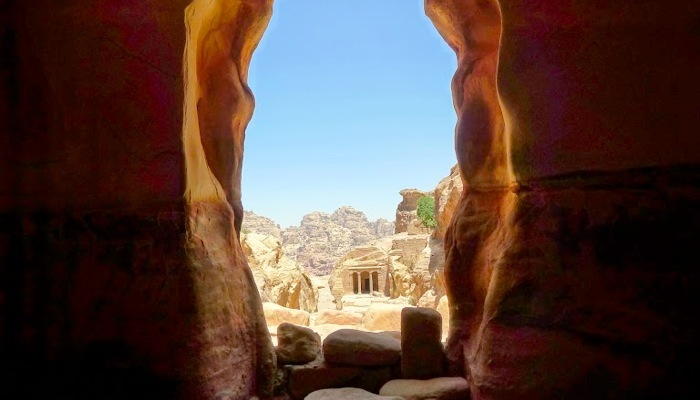
    It is easy to understand why one of its first famous visitor wrote that Petra is a lost rose-red city half as old as time. Despite the number of visitors it gives a sense of wonder which few other man-made places on earth can give. Thousands of carving in those colourful rocks, which seem to have imprisoned the dusk light forever. I started enjoying the temples of Petra in the night accompanied by thousands of candles down the main canyon known as the El-Siq. Being in semi-darkness I could feel the mysteries of beauty while lulled by the Bedouins’ music. The day after I felt just like Indiana Jones and the last Crusade, even though I had to make an effort in order to ignore the tens of people offering me a ride on a donkey, camel or horse. I went for the longest pathway of Petra, the one leading to the place of the high sacrifice. An incredible trail where you can feed yourself with the breath of your imagination, while observing tombs, lion shaped fountain, altars and every sort of urban sculpture of the time.

    I even forgot to eat while walking thirsty to see more and more of that beauty coming from such an ancient aesthetic tradition. In the attempt to find the most famous monument (known as the Monastery) I walked through the wrong valley and find myself among goats and shepherds.

    My experience in Petra ended with a frenetic quest for a (functioning!!!) internet point as I had to take a test for a UN position at the DPKO, for which I was not eventually selected and a nice travellers reunion with two Spanish and a German who happened to stay at my hostel.

    I enjoyed the sinuous hills on the road to Amman and even the stop by police was really unusually nice. Entering into town was like triumphantly getting into real civilization after crossing half of Africa. Old roman monuments were neatly exalted; cross-lights were working properly and shops were beautiful and clean. The house of my friend Davide was just as cosy as it would have been in Rome, Sondrio or Milan.

    The time was ticking and Paolo’s wedding was getting close, I wanted to spend as much time as possible in the holy land thus I packed and get ready to leave. Good enough I decided to check online whether the famous King Hussein/ or Allenby Bridge was a passable point for people travelling with private means. The crossing point has two names, depending in which country are you, once referring to it. It is pretty easy to guess which name was chosen by Isreal. Allenby was a general know as bloody bull who guided the Anglo-Egyptian army to the conquest of Palestine and Sinai at the end of WWI. Lawrence, who supported him in his military campaign said of him that he was “morally so great that the comprehension of our littleness came slow to him”. Also King Hussein was a remarkably great person, probably the Arab leader who had more faith in the peace with Israel, numerous were his negotiations held on both side of that bridge. Eventually, I had to call the bridge to finally be sure: it was not possible for me to use that border post. Good enough, I headed north towards Syria and branch west at a crossing point know as Jordan River northern crossing.

    I was happy to go back to Israel and despite their natural inner arrogance I felt as if I was going home. Israeli securities welcomed me with a four hours mix of waiting, luggage and body searching and all sort of question on my relations with Arabs whom I met during my work and my journey.

    The bike was not a problem at all and good enough they recognized on the licence plate the flag of South Sudan, which is not an arab State. Considering that I was cutting the trip short in order to be back home by the 3rd of August, day of Paolo’s wedding, Israel was my last country. Being it the holy land felt even more as the destination of the whole trip, once the passport was returned to me and I kicked the bike I was thrilled at the idea of being only a handful of kms away from Nazareth, where the journey of Christianity began.

    Hic verbum caro factum est. Exactly there, in that little room which was more similar to a cave. The set of facts, which gave birth to Europe’s religion were very clear in their timing to me and most of the population in the world since they eventually set the beginning of our era. However their geography was for me a matter of fantasy. Up to when I first set foot into the holy land. Witnessing the coordinates on this planet where the coming of Messiah was announced was for me like grasping part of their mystery; like finding part of the missing coordinate on a system of Cartesian Axes.

    From Nazareth I moved to Ashdod harbour as I agreed with the broker of the shipment company that I should have shown up, to put my bike on the next carrier. The boat was late and this was even better for my plan, so that I could have reached Jerusalem on the bike and return two days later to ship the bike just a day before taking off with the plane from Tel-Aviv.

    The holy city is the most intense place I have ever been on earth. You can feel the will of millions of people longing to be on that ground. Jews, Christians and Muslims for all of them the mystery starts there. It is the centre of gravity of the supposed absolute good yet it is currently producing atrocities and tragedies. The conflicting nature of human being is found there at its strongest point. But I do find some fascinating aspects in this mess. It is only through mastering these clashes that we will achieve the true good, that we will acknowledge and feel how united we are with each others.

    While walking the narrow lanes of the old town I found myself in front of a checkpoint where tourist were being rejected. I was not dressed like a tourist, I wore only jeans and shirt, by chance I was wearing the Taqiyah (a round hat widespread among Muslims) which was given to me as a present in Sudan and my beard was long. I walked through. The Israeli policeman kindly greeted me in Arabic and I answered back wa El-eikum Salam u rakmatullah u barakat. I found my self inside the compound of the marvellous Dome of the Rock mosque! Last year I tried with Anna to enter and I was rejected, the same happened the following day with a german looking Italian friend met in the hostel. The mosque is breathtaking in his luminous beauty. The blue tiles were glittering together with the golden roof and its octagonal shape gave majesty to it. It was the time of the Asr prayer, the fourth during the day and I felt as if my presence was disrespectful to the solemnity of the ritual. I gave one last intense sight to the Dome. I imagined the Sancta Sanctorum the holiest place of the Jews temple, I thought at its second destruction in 64 B.C. by Pompeo who desecrated the temple up to its holiest chamber and then at the time of the caliph conquest in the VII century when the Dome was built. That little plot of land is probably the most wanted piece of real estate in the world. The very rock hosted on that ground is sacred to the three monotheistic religions for being the foundation stone, in other word the peace of land from which all the rest of the world and the universe stemmed out when created by God. For the Muslim furthermore it is the place where Mohammed ascended into heaven, it is said that proof of this happening is the footprint of the muslim prophet on the rock as the latter wanted to proceed to the sky with him. After all this mental wandering I left secretly happy for the wonder that my eyes had seen.

    As mentioned earlier, the fate made me to meet with Marco in the dormitories of a sparkling Jerusalem hostel called Abraham. He was from Brescia and came to visit his girlfriend. He was a terrific travel mate, curios to explore and willing to find out about those fascinating places. He was also the perfect excuse for me to repeat the little I remembered from my last visit in the holy land.

    We visited the Getsemani’s garden where the gorgeous church of all nations covers the rock where Jesus cried to our Father, just next to the cave where Juda sold Jesus next the centuries old olives.

    Then the holy sepulchre church with The empty grave and that hole so powerful to me; the cenacle and the dormition church on top of Sion where the Virgin Mary fell asleep.

    The last day, me and Marco went to the museum of the holocaust, known as Yad Vashem, which in Aramaic means a Name (yad) and a Place (Vashem). In order to give a memory to all those innocent victims whose memories could not live anymore and which need a place where to live. The entrance leads us into the left side of a long triangular conic figure along which the museum is developed. The left side is the narrow one while the more it goes to the right, the more it opens up. Each historic event is well described with original findings from those years, documents and short movies. The onlooker feels the weight of those years, the guilt of those who acted as well as those who omitted to act. Just as it leads you to the right end part, you see more light coming in. The last room surprise you for its magnificent size and the apparently bottomless hole in the middle, which symbolizes the deep scar that such historic episode left on the Israeli people as well as on the entire humanity. All around the hole, a lot of shelves are organized stretching up to the high ceiling hosting countless books with the names of those who perished whose number is yet increasing as investigations proceed.

    Just a week after I visited the Yad Vashem I finish reading an enlightening book on the Israeli-Arab conflict The Iron Wall by Avi Shlaim. Either we want it or not the experience contained in that museum is root to the behaviour proved by Israel along the twentieth century, and both parties involved missed a lot of occasion to achieve peace. May this century bring forward what thousands of years did not manage to bring, peace in the Middle East.

    An important Rabin in the history of Israel: Rabin Akiva’ who was a martyr killed by the Romans, once asked to reduce Judaism in one sentence, chose one from vhapter 19 of the Leviticus book. Also known as the golden rule, it is quite banal and as such often I forgot it: Love your neighbour as yourself. A student of Hebrew told me that in the original language, the meaning is more close to Love your neighbour and so love yourselves. As if only by loving your neighbour you will be able to truly love yourselves.

    So my journey on the bike ended and two months of enjoinment in Italy started. A special wedding (Paolo&Stefy), Seaside with my family, Mountains, Friends and a French course to get ready for my next duty station Goma where I will fly on the 16th of October. I won’t go there by motorbike, but I have some time to think how to come back.

    Many friends asked me what did this journey served for. I answered them five things:

    First: admit your fears, cry over them, talk about them to be able to eventually make love with them. Loneliness increases the size of your fears but it also shows clearly their shape.

    Second: do not look only at the target, particularly if the target is far in time and effort, worry about the very next two steps you are doing. You will enjoy them better. You will keep motivation and you will not lose the right way.

    Three: trust the people you do not know, they are the guardian of solutions you yet ignore and either you believe it or not it is the main way in which God acts. The vast majority of time I asked, I was being helped, and I would have not progressed with such a light heart without that help. Indeed that verse of William Blake is true: I sought my God and my God I could not find. I sought my soul and my soul eluded me. I sought my brother to serve him in his need, and I found all three—my God, my soul, and thee.

    Four: learn to wait. We do not master time; shape our wish being aware that everything is a gift. Having authentic hope in what we pursue and having the patient to wait will make us achieve anything we can think of.

    Five: Listen to your neighbour; the meeting is the birthplace of all great enterprises and all ideas. Forgetting to listen precludes us access to this treasure chest of opportunities.

  • Through the Nubian Desert

    Dearest,

    I write you from Hurgada, since the bike is not ready, I better take the chance to write you and as some of you know sciallarmi la ghianda a little bit. It was impressive to arrive from the desert accompanied by a mighty wind into such a big temple of tourism and wealth. It was quite hard to go straight on the road as huge masses of heat from the desert and cool from the sea were clashing on the cost giving birth to a might wind, but slowly slowly, I reached. You can tell that tourism business is lower than usual however there is a considerable amount of visitors particularly from Russia and east Europe. I reached, as usual in my trip with my old bike, with some problems as the oil leakage peaked and a little barbecue was taking place on the beginning of my exhaust pipe due to the drops of engine oil.

    While overwhelmed by the sight of the blue Red sea I was looking for a mechanic who could replace my gasket and rethread the worn out bolts. Suddenly I saw a white dressed man with a long beard looking friendly on his chopper and willing to show me the way. I felt it was good to follow him. His name is Ragab, or Sheikh (Imam) Ragab as people in the neighborhood call him. After picking his child from school he took me around very kindly to look for somebody who could help me. Eventually he offered me hospitality in his office which is rightfully called “the Generosity of Islam”. He his a coiffeur by profession but his office is used to spread information about his religion to tourist.

    Just like in Sudan I immediately felt at home, welcomed genuinely by Ragab and his group of friends with whom I spent the last two nights. Before yesterday we remained long after midnight in front of his shop were Eiman, Ahmed, Osman, Hamdy, Mohamed and Talal were curious to understand and compare my religion with theirs. The most crucial point for Eiman was the concept of trinity. Who should you address your prayers if you have three Gods? He said. After a couple of attempts to explain the trinity I thought it wiser to oversimplify and say that Father, Son and Holy Spirit are just different name of God. Just like Islam has over 33 names we can pray God with different names too. He was not convinced, but happy to hear from me. It was a pleasant night and they covered me with nice little presents: books, perfumes, teeth cleaning sticks and Taqiyah, the round hat wear by Muslim.

    Last night Ragab asked me if I wanted to join a meeting on the situation of Morsi, and I thought it could be interesting to better understand the reasons of both parties. The way I understood the word meeting, was a gathering in a house to talk with his friends, just like the night before. Eventually a video camera showed up and we were suddenly in a taxi. I had that feeling that I usually have when I am about to find myself in troubles. In five minutes we were in a huge square with thousands of people demonstrating in favor of Morsi. I thought of going away as it was not my cause. But I ended up thinking that it was a unique opportunity to listen to the reasons that are less covered by the media.

    I think there were around five thousand people, but when asking the people around me they were thinking at twenty thousand. Ragab reason for taking part in the demonstration was both religious and political. The latter one focused on the fact that Morsi was elected by Egyptians for the first time in their history with free elections and despite is many mistakes he must be given a chance to go on with his legislature allowing him to take on board the unrepresented political parties who caused the Tamarod movement. I acknowledge his legal perspective, and that is what most of the people, a part from religious minorities said to me in the cities that I have visited.

    The manifestation was definitely peaceful and leaders were asking participants to leave way to traffic and to respect army and police vehicle passing by. The slogan used where blaming Fattah Al-SiSi (Ministry of defense) of military coup and warned him of stepping out of office because their president is Morsi. They were stressing that Egypt is an Islamic country and that the Sharia should rule. Men, children, elders and few women were energetically shouting backed by loud music repeating an old song from 1973 which became popular after the infamous war of the Yom Kippur. Bismillah bismillah, Allah Akbar Allah Akbar . The Imam which was next to me (Omar) told me, this is from 1973 when we won the war. Arab countries won in the sense that they manage to unlock the stalemate against negotiations supported by Golda Meir and Kissinger but the lives toll in that conflict was 2,838 dead Israelis against 8,528 Egyptians and Syrians. (Thanks Antunyy for your great book). Anyway. Omar the Imam next to me went on explaining that this was a military coup to restore Mubarak regime. Egyptians have tasted freedom and they will not let it go. He thinks that the army is causing all the security problems in order to let the international community thinks that the army is the only solution to control Egypt. Yes he said they are the one killing Christian and peaceful strikers in the roads. But Inshalh by the power of God and the power of the street we will have our President back. He warned me that behind Tamarod movement (in Arabic it means the rebel) who started the demonstration which paved the way for the removal of Morsi, there is Saudi Arabia, Oman, United Arab Emirates and the US. They all fear a democratic government because it might lead the way for revolution in their own stronghold. By not taking any side the US are strongly criticized by both pro and anti Morsi supporters.

    I asked Omar about Morsi nominating Ade Assad El Khayat, a member of Jamat-Al Jihad as governor of Luxor. Said group is famous for their violent agenda, claiming the only way to change the political situation is through violence. In 1997, dressed as policemen, some members of this group slaughtered 50 tourists in the temple of Hatshepsut queen in Luxor. Omar claimed that the group shifted its thought after the revolution of 2011 being convinced that a peaceful solution to the change of regime was possible and that he resigned after two weeks in order not to embarrass the president. He went on by saying that Morsi was respectful of all his critics but this respect eventually led the way to his removal.

    The parade ended at 2 in the night in front of a luxury resort (Sea gull) in Sheraton Avenue owned by a high army officer. Such officer organized a parade when SiSi took the power away from the muslim brotherhood, in the same way the parade provocatively stopped for prolonged dancing in front of the resort writing in huge characters on the road in both Arabic and English GO OUT SISI, GO OUT. This morning I went to check and the paintings were already removed.

    My dear friends asked me what I thought about their little revolution. It was difficult to answer to people who have been so good to you when you know that you might offend their feelings. I looked for all the diplomatic democristianity inside me and said: Shuf Aku (Look brother), this is not my cause. I am impressed by the mass commitment to what you believe is the public good. However I think that the emphasis should not be on stressing that Egypt is an Islamic country. This is precisely the reason for which they managed to remove Morsi from power. It might be that he did not have a chance to prove whether he was a good leader or a bad leader, and for this you have to insist on where is my vote? Where are the next three years of this legislature? I honestly do not think that government should be led by religion. Otherwise you will have another Omar El Bashir. A religious government pave to way for dictatorship as it is justified among masses by the power of God. In truth I think that God do not need men to show his way on this world, because he has already put his seed in each one of us.

    I received no answer. Probably he expected more support after I saw the manifestation. They said that they will strike every night until Morsi will be back in power. The situation is quite volatile. This post is getting a bit long but I can not omit transmitting you a bit of the beauty I was exposed to from Khartoum up to here.

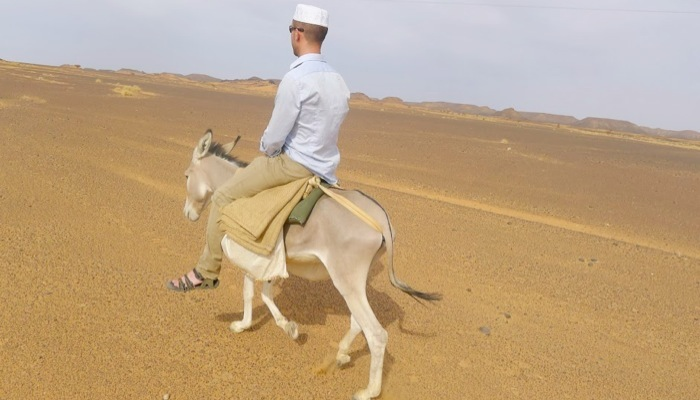
    Visiting Meroe Royal Cemetery has been a blast. I was the only visitor and honestly felt like Indian jones. A little bit less glorious as I approached the site on the back of a donkey. The wind was whispering to my hear tales of thousands of years ago while imaging naked chest men working to erect those majestic monuments to remember their leader forever. I also thought of Dr. Giuseppe Ferlini an Italian Surgeon working in the Egypt army during the occupation of Sudan. In 1834 he traveled to Meroe in his quest for treasures, he uncapped various pyramids with dynamite. He was relatively successful but in Europe nobody believed that such fine gold jewellery could come from the black Africa, he eventually managed to sell his stolen treasures to some museum in Berlin and Munich where they are still fund to this days.

    Crossing the Nile on the way to Karima was a joy for the heart, seeing what such a miraculous amount of water can turn the desert into luxuriant vegetation. During the first day of desert crossing I was mentally enthusiast and enjoyed my loneliness in a place where life is not welcome. This allowed me to take the best out of Karima, climbing Jebel Barkal wondering of the first Christian who set their feet in sudan in the II century exactly there. I also rejoiced to go on prayer on Sunday with a group of southerners from Unity and Jonglei who ere still in the north as their children where finishing schools. They were not happy about separation and I could just encourage them in the hope that one day Sudan will be united again.

    During the second day of desert crossing to Dongola, the bike had some hiccups and a sense of fear breached in my heart. No life up to the horizon, only the wind and the heat. What if… I better not think too much. Yet the more I was rejecting the thought of stopping to work on the bike the more I was scared and an awkward headache conquered my head. Good enough my prayer calm me down and allowed me to reach nice Dongola where I could rest and work a bit on the bike. With a new fuel filter and a new spark plug I was back on track and ready for the last 400 Km to Wadi Halfa.

    There I met two Hucranian travelers called Pasha and Ksander, who are hitch hiking from Tanzania whom I knew from the Sudanese embassy in Addis. It was nice to share with them the trip even though I was so exhausted that I close myself like a larva in my sleeping bag on the deck of the ferry lulled by the wind and the stars.

    Gorgeous and majestic was the appetizer of Egypt civilization, the Abu Simbel temple on the western shore of Lake Nassir with the colossi of Ramses II looking proudly at us, reminding us of a time where religion was used to rule the country. It was among the many temples part of the huge archeological salvation mission organized by some 30 countries including US, URSS and Italy which in the sixties organized the transfer of all the temples that would have been submerged by the high Aswan Dam.

    Getting the bike in Egypt was an expensive headache which lasted one week. Good enough I used this time to cruise Aswan and Luxor with Pasha and Ksander. It was nice to wonder around with them reading about the miths and legends of ancient Egypt. Allow me to mention only my favorite, even though many of them are fascinating, I will be happy to tell you more about the genealogy of the Ennad the nine main Gods of ancient Egypt headed by Ra who created the world out of primeval waters giving life to the air and the mist god through swallowing his own seed. The myth I will narrate is the one of Maat and Isfet. They are the concept of truth and falsehood.

    Maat and Isfet were brothers. The latter borrowed his best knife to Maat and by accident the knife got lost. Isfet who was very jealous of Maat success refuse any other knife in return and took his brother in front of the jury of Gods stressing that: Its blade came from the copper of the mountain of El, its handle from the wood of Koptus, its scabbard from the tomb of the God and its belt from the herds of El. The court favored Isfet and this God of falsehood insisted that the eyes may be removed from his brother and that he will serve for ever at his door as a servant. And so it happened.

    However Maat presence was a reminder for Isfet of his sense of guilt and thus asked his servant to take him to the desert and leave him in the land of Lions where is flesh would be devoured. Nevertheless the servants listen to the prayer of Maat and lead him out of town but did not take him to the lions’ land. They return to their Lord stressing that they accomplished the given task.

    For several days Truth wondered around in the desert and valleys, until a woman saw him and strucked by his beauty, superior to the one of any other men she invited him to go home with her. They spent many hours together and that night the woman became pregnant of truth. The boy grew healthy and clever like no other boy in that land, and his mate out of jealously were mocking him: Whose son are you? In deep sorrow the boy went to his mother to refer the question. She answered, you see the blind doorkeeper at our gate? In truth he is your father. Moved by compassion the boy went to him and listened to his story. Once he heard how falsehood had unfairly treated him he set for a journey to avenge hid father. He took with him a gorgeous Ox, ten loaves of bread, a staff and a sword.

    When he reached falsehood’s herdsman he asked I have traveled far and far to go, would you look after my Ox until I return? The boy gave him the bread the staff and the sword in reward and went. Months went by and Isfet (falsehood) visited his herd and impressed by the beauty of that ox asked it to be killed. When the shepard said it was not his and thus not possible he said he will not mind the words of a kid and that he will give him in compensation any other Ox.

    The boy learnt of this and returned to claim his animal. The herdsman told him that he could choose any in compensation. But the boy challenged falsehood to face the same court of Gods which judge the trail with his brother the truth. Is there any Ox as large as mine? If it would stand on the Island of Amun, his tail would rest on the papyrus marshes while his horns would stretch between the eastern and western mountains the great river would be his bath spot and it would give birth to sixty calves a day. The court warned the boy that no such animal exists and so he smartly challenged them. Is there any knife which blade came from the copper of the mountain of El, its handle from the wood of Koptus, its scabbard from the tomb of the God and its belt from the herds of El? I am Truth son and I came to avenge him.

    Falsehood started shaking and said that: By Amun and by the King if truth be found alive may I be blinded in both eyes. The boy came with his father and the court saw the truth in what he said and thus condemned Isfet to the greatest punishment. One hundred blows, five open wounds, be blinded to both eyes and be put at the truth door as a servant forever.

    Yalla, my bike should be ready and Ragab called me to go and great him as tomorrow I will start my journey to Suez and then down to Jebel Moussa (Mount Sinai). I would have preferred to go by boat but as no such service is available I will confront with some more days of desert wind, with its sandy snakes flying on the road and over me all the time.

    A strong hug to each of you.

    Gabri

  • To Khartoum

    Dearest,

    It is late at night and in few hours I will be heading north towards the legendary Meroe Royal city with its pyramids in the warm desert. I want to write now this update as these days were intense and particularly gifted with good luck and great people.

    Reaching Addis I could only think about fixing the bike as too many little problems were affecting it (rear tyre, starter, chain and lights). I met a good fellow with a bicycle while getting closer to the famous Piazza. Charlie. Long reddish beard good British eyes, he asked me where I was heading to and offered to take me to a place where three other bikers were fixing their motorbikes. That is how I ended up in Wim’s Holland place just next to the Chemin de fer the station which used to run trains between Ethiopia and Djibuti. I meet the two Archies and Chris whose journey started in Edinburgh and will end in cape town, they looked much stronger in spirit than me. I could tell their hearts were lighter than mine. I was still vexed by the anxiety of respecting the itinerary. They were not. Not even mentioning Charlie whose trip started in London by bicycle and covered in the last 3 and half years a good portion of the whole world. It took me a week to learn from them. Indeed after Addis I started to enjoy the journey at a different pace. Understanding that I can not dictate the time of embassies, mechanics, spare shops and everything that surrounds me, it was quite a big discovery for me, as I made of time control and maximization a must in my life and my work since the last years of my university. Becoming conscious that time can not be always tamed makes one content, accepting it might return happiness.

    Flavio was a wonderful mechanic dismantling the whole of my clutch carter including the clutch to find out what the hell was wrong with my starter. He discouraged me saying I would have needed two weeks to get the spare, but against the odds I got that little spare in the Yamaha shop next to Piazza, opened 2 months earlier by Armenian migrants. Ron, a friend of Wim also helped a lot in fixing some oil leakages. By the way, surprisingly Wim was a colleague of Staffan de Mistura during is duty in Khartoum at wfp, he confirmed me the anecdote of Mother Theresa of Kolkata. I was excited about that.

    The staying in Addis was boosted by the invitation to lunch after the mass (in Italian) by Stefano and his wife Elena, their introduction to Ethiopian historic wonders was pivotal in enjoying my stay in Ethiopia. I won’t start lonely planeting the tourist spot I visited, however I was honestly moved by the historical site pertaining the Italian occupation as well as Halie Selassie way of returning to power in 1941 thanks to italy’s alignment with Germany during WWII which triggered the support of the UK. The latter never really listened to the heroic speeches of Halie Selassie denouncing Italy’s use of chemical weapons during the conquest of his land. Further proof of how realist international politics is likely to be the most consistent interpretation of history. However here is part of his speech when in May after six years of Italian occupation he returned to Addis:

    Today is the day on which we defeated our enemy. Therefore, when we say let us rejoice with our hearts, let not our rejoicing be in any other way but in the spirit of Christ. Do not return evil for evil. Do not indulge in the atrocities which the enemy has been practicing in his usual way, even to the last.

    Take care not to spoil the good name of Ethiopia by acts which are worthy of the enemy. We shall see that our enemies are disarmed and sent out the same way they came. As Saint George who killed the dragon is the Patron Saint of our army as well as of our allies, let us unite with our allies in everlasting friendship and amity in order to be able to stand against the godless and cruel dragon which has newly risen and which is oppressing mankind

    Halie Selassie could be considered a sort of predecessor of Gheddafi, a visionary pan African who enjoyed the Jamaican thoughts of his person as the new messiah as he was of Davidic lineage and apparently performed certain miracles when in Kingstone, supposedly he stopped a drought. The song Iron Lion Zion by uncle Bob is dedicated to him.

    After a week in the capital I understood the above mentioned concept of time related to my trip but still I was very happy to hit the road again. Reaching Lalibela everything went smooth, beside a majestic and awe-inspiring hailstorm. Ice falling on me was as big as smarties and despite initial attempts of bearing the pain on legs and fingers I was forced to find shelter in a granary next to the road. I was freezing, my hands were blue as I was at 3400 m asl and as wet as I could be. When it stopped I got warm with some sweet herb tea and reached happily Lalibela excited and curious like a baby and the cool dirt road which granted me 64 kms of pure riding fun.

    Eleven churches were carved into the live red sandy rock found at 2500 m asl by order of King Lalibela in 24 years with the sweat of 7,000 men. One of these churches was carved in one night by an angel for the King’s wife, apparently. Churches beauty and impressiveness can not be expressed by picture as they are statues as big as building and as detailed as statues. King Lalibela, who was of semitic dynasty was in exile in Jerusalem and wanted to replicate the holy land in Ethiopia. For this reason there is a Golgota, a Cranio a river Jordan and Olives garden and so forth in the second imperial capital of the country. A sense of mysticism rein in the village and hundreds of priest family with their traditional dresses walks around and pray with an awkward chant. After Halie Selassie failed to chase the Italians he came on a lonely pilgrimage to these holy churches. Five years later he got the brits support.

    Remarkable places were the fertility pool where infertile women are dipped three times in the hope of improving their unlucky situation. (No such treatment is foreseen for men) and the secret column, wrapped in various holy layers of clothes. Written in Amaric, Giz, Hebrew and Greek, it contains holy secrets of the world’s future which the emperor in the 16 century decided to maintain secret to the humanity. No one but the patriarch of the Orthodox Church is allowed to read those scriptures. This prohibition triggered in me such a strong curiosity which made me almost unable of controlling myself in the wish to touch that column. My intentions were already clear in the mind of the white dressed priest, holding its prayer book who stressed not to touch.

    The time seems stop in Lalibela and Christian faith is crystallized like a mysterious sphere surrounding the whole life within its reach. Unfortunately the younger inhabitants appeared to be much more attracted by the western material wealth, always bothering and trying to spill money from you in all possible way. However I did have fun with some kids during some street matches of ping pong in which I was beaten twice by a 13 years old, who eventually asked be the bill.

    On my way back to the main road I was caught in a tranhumance of humans a livestock of all kinds probably going to the market day. When it ended I was left with 15 kms of dirty road and wanted to enjoy. After speeding for a couple of kms, the chain could not bear the stones on the road and got broken. After initial discouragement, the smile of the little pastors around and their genuinity encouraged me to fix it. This also made me to forget the kids who threw stones at me tha day before (things for which I was prepared by all other bikers met on the road). 150 km later I was out of fuel as no petrol station actually had petrol. Good enough I had 2 liters in my emergency jerrican and got other two liters from a boy in the following village. These took me up to the next big town, thanks God there was fuel there.

    It is so sweet and pleasant the feeling of being hopeful. Even if all odds are against, the only act of having faith and trusting that things are going to work out is mightily fulfilling. That is part of the power behind faith I guess. I also thought that this can deeply affects human relationship. Indeed with all the prejudice I had towards Ethiopian whom undeniably have statistically more thief than other people, I hardly could enjoy their company and thus be kind in return or able to disclose some of my gift to them. Indeed the situation turned upside down in Sudan, where people are humble, and hospitable to unimaginable extent.

    Gondar was nice and very Italian in style, visiting the Fasil Castle nourished even more my historical fantasies of the old Italian Empire. But my opinion of Ethiopians went further down as I met two apparently friendly guys, with whom I had nice sharing until I realized they only wanted to change my money at the worst possible rate into Sudanese pounds inventing the most false stories ever heard. On the contrary all the Ethiopian and particularly Eritreans met outside their country are very kind and honest.

    Descending from the plateau to the low lands of Sudan was an emotional experience, breath taking scenery was accompanied by riding pleasure on a fun road taking me 1,500m lower than I was.

    My memories of Arab hospitality and culture made me willing to enter the Sudan as soon as possible. After clearing the exit procedures, the first answer of the soldier patrolling the Sudanese border was: De Mushkila, Ita motara ma emshi fi Sudan. Questo e’ un problema, la tua moto non puo’ entrare in Sudan. Nel mentre mi indicava di tornare in Etiopia. I miei occhi non devono aver avuto una bella espressione, ma ho subito ricorso a quantita’ industriali di speranza. Ho fatto chiamare gli ufficiali di grado piu’ elevato dicendo che avevo gia’ comunicato tramite l’ambasciata di Juba della mia venuta e che il carnet de passage lo possono avere only the European bikes. Officers were kind and understanding, encouraged by my little arab similar to the one of a 2 years old child.

    There started the gorgeous stay in Sudan. Policemen offered me tea and dinner and a place to sleep. I eventually felt too much of an obligation for them and thus found a shack for truck driver next to the noisiest mosque ever.

    At 7 I was already riding after a night full of bloody mosquitoes and rather debatable sleeping conditions, but a good breakfast with fritter and milk tea in the middle of the road. I thought I would have needed two days to cover the 600 km to Khartoum. When I realized how full of nothing Sudan roads are I got enthusiast to reach the capital in one day. Policemen where making jokes about me being a prisoner from the south but always in a respectful and joyful manner, I enjoyed tea with them on the way and was pleased by their curiosity towards the conditions of Juba and the south in general. Predictably the chain broke again at 180 km from Khartoum and baker Ali was so sweet in bringing me four loafs of bread while I was fixing it in the small shade behind his oven. Again the concept of hope crossed my mind. It must also be the driver of such hospitality, often driven by the golden rule of the tit for tat. It is incredible how willing you are to return way more than you have received when somebody else is generous in the first place. How different a lot of human relations would be if only among the daily routine full of hatred justified by thousand of historic precedents we could remember this basic rule. Let me not get into the application that I did of it to the Israel-Arab conflict as I am reading a fantastic book on the subject covering the last healf century of its history. It was nice digging in my game theory subject from university.

    Arriving in Khartoum I realized how huge is this capital, ultra developed in horizontal way with some gorgeous examples of skyscrapers, the most impressive for me being Bushar Fadel or the sail built by Gheddafi in occasion of an African Union conference. It was a relief to finally find the centre of Usratuna where Lucia was waiting for me thanks to Maria and the sisters coordination from Juba. I felt immediately home thanks to her lovely, fun and sincere hospitality. A fantastic community of Italians and Sudanese welcomed me as well as my family could do. Marco and Mattia with their wonderful dinner, so special for the drinks availability of the country and the precious advices on how to move in the capital and the country. Ashraf whom I met already in Juba disclosed me all its care through various dinners and meetings, one more interesting than the other as I could fill all my curiosity with his endless knowledge on the country’s history. Again Carlos whose smile took me through the Mahdi house wondering about the assassination of General Gordon (the man of the ever victorious army) just two days before the arrival of his majesty’s , as well as the Sufi’s ceremony in the graveyard of Oumdurman just tonight, the holiest day of the week for Muslim. How welcomed I felt in their ceremony being invited in their dancing circle and not being seen too much as a foreigner. One of them prayed for me to come back to the Sudan. I actually hope so too. Never I felt so at home and so safe. There is much to say about Sudan and the friends I met here. But the hour is late and the road gets closer.

    Check this video out (thanks Marijke) Our Sudan…

    I will try to go safe through Egypt, minimizing y stay there and avoiding Cairo. I will write soon.

    Click here to follow my geo updates

    Sleep well my folks

    Gabri

  • From Juba to Shashemene

    Dearest,

    I take advantage of a forced stop in Shashemene to write about the first twelve days of this journey. The itinerary is rather screwed, but this was quite predictable. After ten days of peace and gorgeous, breathtaking sceneries, the stage between Arba Minch and Shashemene was a combo of bad luck.

    I broke the chain just after seeing a gigantic (dead) crocodile. People were very helpful and in two hours I was back on the road. The landscape evolved into never ending fields of maize, grain, bananas and taf, the cereal used to prepare the world famous Ethiopian Njera. Just 15 kms before destination, tack… my engine immediately stop as the broken chain was stuck. Quite disappointed I started to work on it, while a crowd of thirty people surrounded me with curiosity and smiling faces. As the sun was setting, it sounded a better idea to be pulled by somebody else up to town so I could have got a new chain. With uncertain balance I reached the place of Silvia, Daniel and their two delicious children whom where hosting me. Teodorus, the youngest asks me to see the crocodile that I saw.

    Nooo. I came to realize with optimistic hopes that I had lost the backpack with camera and passport on the way. I did the road in the opposite direction, and Silvia presented me the hard reality, it was stolen during my last stop. My mood was underground. I was lost and with me the whole journey as that backpack contained the only pivotal item to continue the travel. Thanks God Silvia employees helped me to report the issue to the police, we collected info from the community up to eleven at night or five in Ethiopian time. Everybody was very optimistic that I would have got back the backpack as we had eye witnesses. The following day we diversified our strategy, after promising a good amount of money to the police for speeding up the process, I was suggested to ask the help of a local elder for whom it would have been easier to find the items as people shut their mouth up when policemen are involved. I went up and down the whole day with Silvia’s staff, in the early afternoon I was almost hopeless and I said a rosary to keep calm and a positive attitude. Two hours later we reach the house of the thief, who was not there, but I got everything beside the driving license. Great joy, I paid out the agreed rewards and was forced to report back to the police. There they wanted to keep my stuff under custody as a proof against the thief. No way, I was going to allow that. I enjoyed the drama, started pretending I was calling the embassy, trying to walk out without consent and it did not work. So I played the humble card begging them to let me go. Somebody suggested they take a video of me presenting the items contained in the bag and, good enough, that was it. I was very lucky.

    Today I fixed the bike with a new chain, fixed a crack in the engine with some epoxy glue and added some engine oil. It was now a bit late to leave so I decided to enjoy the late afternoon here to write you and with Daniel and the Children at home. I am afraid I will have to skip even Lalibela and not only Aksum If I want to reach the Sudan border in time, before my Sudanese Visa expires. Too bad, but I will have time to visit those wonderful places in future accompanied by people I love, which will make it definitely more meaningful.

    Up to now the days passed rapidly and smoothly. Going out to Uganda has been like going back home, it was a pleasure to greet the old friends made in these three and a half years across South Sudan and North Uganda. It is hard to describe the wonder of my eyes after crossing to Kenya when I reached the highest point of the plateau, starting lowering in altitude through a beautiful tarmac road which was as pleasurable as my Mossini-Triangia in Valtellina. The only difference being that I arrived into a semi desert on the way to Lodwar and camels where popping up on the road while grazing. I spent the night in Kainuk which is the beginning of the Turkana’s people land. I had to leave the bike at the police station as no hotel had a compound were it could stay safe. All the people I was meeting thought I had something wrong in deciding to travel on that route alone. Police and travelers scared me to death telling me about all the ambushes that occurred in the last years. I was about to consider the idea of going back, when I took a big breath, did some minor fixing at the bike and left. While praying that it was not my day to go, I rode as fast as I could for the first hundred kms which were supposed to be dangerous. Fiuuu, how light my heart was when I realized I was out of danger. In Lodwar the diocese received me with great hospitality and I could see that Turkana people, as pastoralist they are definitely as proud and as though as my old friends of South Sudan. I greeted the bishop after the morning mass and followed his suggestion to take the road nearby the western shore of Lake Turkana. I think I have almost cursed his grace bishop Dominic when I found myself in a very, very sandy road. The bike was loaded with full tank and luggage, including water and balancing my way out was possible only between the first and the second gear. The thought of going back and using the longer and better road crossed my mind, and was soon discarded. I found little villages of nice and peaceful people every 20 kms., women were wearing tens of necklaces which exalted their long necks. I discovered that they never remove them even when they go to bed, it would be rather uncomfortable for me. After six hours the lake was revealed to me in his beauty like a mirage. In the middle of it I could see what seemed a spaceship at the beginning. It was the northern island. I was not far from the border town of Todenyang. I stop for some minutes to contemplate what looks like a bigger version of the dead sea. At five I arrived in the catholic mission and was happy to meet with the charismatic Fr. Steven who run a very well organized mission in support of the local population and tries to broker peace negotiations between the Turkana of Kenya and the Dasenash of southern Ethiopia who still kill each other over access to grazing land and water. He was humble and lucid in acknowledging how little progress was made in that regards. The evening was special; we prayed and hate dinner with a lively group of young Kenyan volunteers on break from their universities and eventually enjoyed the rainmaker under an ocean of stars.

    The following day I crossed the border, immense and desolate infinity beyond the reach of my eyes. I was happy when I met a German on his bicycle (yes paddle bike) who was going from Israel to South Africa. He was still thinking that travelling alone was a great thing, I start thinking that sharing is likely to be the only real travel experience.

    In Omorate I had to cross the Omo river. It was Sunday and the ferry did not work. Thus, I hired six people with the help of Stevie and loaded the bike on a small boat. It worked out pretty well, beside some hiccups of the boat engine. The immigration department of Ethiopia was an hilarious experience. A drunken official couldn’t find neither the keys to his office, nor the stamp or the ink-pad. Eventually he was so confused that he put the exit stamp rather than the entry one. He was a small man with huge spectacles which kept on falling from his nose. I just tell you that instead of my surname he wrote my nationality. So I was registered as Gabriele Mario ITA. This because in Ethiopia official documents must bear also the name of your father.

    The following day I followed Paolo’s suggestion of looking for the famous bull jumping ceremony of the Amar tribe. I found a guide, also stinking of alcohol and full of local Kat, and reached the place just after lunch. This pastoralist tribe is quite similar to those of East Africa, they go around with their little chair and their gun, the women are more attached to traditional clothes and decorations. In few words the ceremony is for the initiation to adulthood of a young man. All the women from his extended family after drinking a good amount of local beer are supposed to get whipped by a team of whippers in order to show how much they love their relative who is about to jump on the back of ten bulls to prove he is ready for marriage. These women are gorgeous in their outfits made of goat skin, they have sharp and attractive facial features and their proud chest makes them quite gifted by Mother Nature. The only bad thing is that they smell terribly due to the fact that they are not supposed to wash themselves above the knee and the mix of soil and incense with which they paint body and hair is everything but a perfume.

    Their back were bleeding from the hundreds time they were hit. It was impressive to see how they were pretending to be hit stronger and stronger. At sunset we move to a new location on top of a hill, bulls were prepared and the young man, completely naked jumped amid suspense. The bells on the women ankles and hips went crazy and immediately after the jump everybody started dispersing back to their hut. As for myself… I realized my lights were not working and thus I luckily found two Chilean with their girls who hired a bike from the closest village and returned under their guidance. These guys are also crossing the continent with bicycle. Much more remarkable than my trip!

    What did I learn up to now?

    The first day my legs where shaking at the idea of the never-ending set of problems, hardships and risks I would have incurred into. Suddenly I found this thought inside my helmet which calmed me down better than a bottle of good wine. When you are aiming at great objectives, such greatness might make you feel too small, too imperfect and not daring enough to try to embark in such an enterprise. Eventually everything starts with just one step. So instead of focusing on the journey I focused on the following one hundred meters. Do them well, taste the beauty of the small piece of world where I am setting my feet and tires. If I get a broken chain, a puncture or whatever else, I will stop and find my way around the problem. It will also be a gift of this trip after all.

    In some stages I was so exhausted that I could avoid other people’s company and my mood became unfriendly. This happened also in my daily working routine. And that is when you lose all the richness of life which comes largely from the meeting with other people and the mutual exchange of views, thoughts and memories. There is enough beauty to cure any paining heart in the relationship with others. The moment you close yourselves to become a lonely traveler it will be the moment when no matters how many kms you do or how many days you live, you will not move ahead of a single step. With all the corners of one’s mood, opening to what the other could give is a delicious medicine.

    Tomorrow morning early I head to Addis, hopefully Yamaha authorized dealer can get me a new spring for the starter which is making a rather worrying sound. It will have to be fast, I must cross the next border by 19th of June.

    A special hug to each of you.

    Gabri

  • Motorbike Return from Juba

    Dear friends,

    I have now completed two years and three months of life and exciting work in South Sudan. A year flew in the enchanted village of Isohe and the rest in the hectic life of Juba. I am writing to inform you of the journey I am about to begin. Tomorrow I will leave Juba with my bike, a Yamaha Tenere 600, to return to Sondrio through 8 countries for a dozen of thousands of kms. Find attached the itinerary for those interested in the details of the stages. You are welcome to join me, or recommend me to any of your dear friends on the way.

    The idea of this trip came almost a year ago. Preparations started amid skepticism, could I really embark on a similar adventure? The days have passed, I have been granted the though visa of Sudan and the bike slowly assumed the needed shape for such an enterprise.

    The desire for this journey raised together with the understanding of my lowering enthusiasm vis-a-vis the daily routine. The security and satisfaction of the position I was covering, made me too busy and less attentive to the needs of the people I was meeting every day. I felt that this ‘everyday’ made of exciting projects and negotiations rather than fully feeding my identity through the meetings that offered me, was flattening me. I felt the desire to return to the uncertainty of the adventures of my university time. By then we started our trips with the backpack without knowing if the journey would have turned into a summit.

    I have a fearful respect for the thousands of miles that I have in front of me in the next two months. Everything can happen. I am open to the unexpected, to remind me that with faith and hope I can chase any dream, catch every desire. There is nothing that the Lord allows to happen if we are not mature enough to receive it, the important thing is to draw the right lessons from these events.

    I was reminded by my friend Giorgio and the Father Provincial of the Comboni Missionaries, that I always put myself as gravity force of my decisions. A time must come in which decisions assume the shape of responsible choices towards our loved ones. I pray to learn from this journey to understand that the ever more stimulating experiences I chase are nothing but suggestions to the true inner journey which lead to the conviction that the real goal is to tame (in italian the etimology is more clear: to drive towards the master’s scope) ones mind.

    I’ll take three months time, two for the trip and a solid one to enjoy the richness of friends and family in my valley. Eventually I would like to resume work in the promotion of private sector for development and public-private partnership, this is fruit of what I saw in these years and it would deserve a good conversation time in front of a drink.

    It is possible to follow my journey through my blog (www.wanderingeyes.net – which is now also going to be in english) and I will update hopefully at least once in each country visited and through the map that draws sms with geotagged updates (http://www.youposition.it/it/map/3771/sud-sudan-italia.aspx) . Thanks to the technical assistance of Alessandro.

    In the picture you see the motto of the trip (suggested by my brother Sebastiano). It means “Not to show off, but to be” it is also the motto of the fifth regiment of the Alpini. It was proudly painted by Anna who along with Samuele inherit what has been done so far in Juba. Thanks to them for this great month of friendship and communion.

    See you soon, Inshallah

    Gabri

  • Arrivederci Sud Sudan

    Carissimi,

    Sono passati due anni e tre mesi di vita e lavoro entusiasmanti in Sud Sudan. Un anno e’ passato nell’incantato villaggio di Isohe e il resto nella frenetica vita di Juba. Vi scrivo per comunicarvi il viaggio che mi accingo a fare, domani partirò’ con la mia moto, una Yamaha Tenere 600, da Juba per tornare a Sondrio attraversando 8 nazioni per una dozzina di migliaia di km. In allegato l’itinerario per chi fosse interessato ai dettagli delle tappe o se volesse raggiungermi, o ancora raccomandarmi a qualche amico sulla via.

    L’idea di questo viaggio mi e’ venuta quasi un anno fa. I preparativi sono iniziati nello scetticismo di poter davvero imbarcarmi in un avventura simile, eppure i giorni sono passati, i visti mi sono stati concessi e la moto insieme a due amici meccanici ha preso la forma necessaria a questa traversata di terre e popoli della cui esistenza ho solo letto sui libri.

    Il desiderio per questo ritorno e’ nato insieme alla realizzazione dell’indolenzimento del mio entusiasmo quotidiano. La sicurezza dell’ottima posizione lavorativa che ricoprivo mi ha reso troppo impegnato e meno attento alle esigenze delle persone che incontravo ogni giorno. Sentivo che questa quotidianità’ fatta di eccitanti progetti ed entusiasmanti negoziazioni invece che nutrirmi appieno attraverso gli incontri che mi offriva, mi appiattiva. Ho sentito il desiderio di tornare all’incertezza avventurosa dei viaggi della mia università’. Quando si partiva con lo zaino senza sapere se si sarebbe arrivati in vetta.

    Ho un timoroso rispetto nei confronti delle migliaia di km che mi troverò’ davanti nei prossimi due mesi. Tutto potrà’ succedere e insieme al desiderio di bellezza con cui mi riempirò’ gli occhi nella valla del Nilo e in terra santa, sono aperto all’inatteso che mi si presenterà’, per ricordarmi che con fede e speranza posso rincorrere qualsiasi sogno, acciuffare ogni desiderio. Non c’e’ cosa che il Signore fa accadere che non siamo abbastanza maturi per ricevere, l’importante sarà’ trarre i giusti insegnamenti da questi eventi. Mi e’ stato ricordato dal mio amico Giorgio e dal Padre provinciale dei Comboniani che metto sempre solo me al centro delle mie decisioni, deve arrivare un momento in cui le decisioni adulte tendono all’assunzione delle proprie responsabilità’ verso il prossimo. Prego di imparare in questo viaggio a capire che le esperienze al di fuori di me sono solo dei suggerimenti per tenere il sentiero che fa realizzare che le sfide più’ importanti e più’ sconvolgenti sono quelle per ammaestrare (etim: che indica il fine, lo scopo del maestro) se stessi.

    Mi prendo tre mesi di tempo, due di viaggio e uno abbondante di ricchezza tra amici e famiglia nella mia valle. Successivamente vorrei provare a lavorare nella promozione dello settore privato nello sviluppo, e fare esperienza di una grande organizzazione…

    Chi lo vorrà’ potrà’ seguire il mio viaggio attraverso gli aggiornamenti del blog (www.wanderingeyes.net) che spero di scrivere almeno una volta per ogni nazione visitata e attraverso la mappa che traccia gli sms geolocalizzati a questo link.

    Nella foto vedete dipinto il motto del mio viaggio che mi ha fatto scoprire mio fratello Sebastiano. Significa Non per apparire ma per essere, e’ anche il motto del V reggimento degli alpini. E’ stato orgogliosamente dipinto da Anna che insieme a Samuele ereditano quanto fatto fin ora a Juba. Grazie a loro per questo mese fantastico di amicizia e comunione.

    Con affetto, un abbraccio

    Gabri

  • Montagna dello Splendore – Monte Kenya

    La vigilia di quest’ultimo Santo Natale e’ stata diversa da tutte le precedenti. Con il mio amico Filippo abbiamo lasciato Juba per Nairobi, dopo esserci meravigliati come bimbi della ricchezza di cibo disponibile nei centri commerciali, e della goduriosa frescura kenyota, abbiamo deciso di riposarci prima della messa di mezza notte. Ci siamo concessi una lussuosa cena frugale a base di riso e patate e siamo partiti con un taxi alla ricerca di una chiesa. Ebbene dopo due basiliche chiuse il tassista esausto e imbarazzato ha deciso di abbandonarci presso una discoteca evangelica in cui il redivivo Elvis Presley nella sua versione piu’ abbronzata ha coordinato i balli mistici e scalmanati degli astanti che celebravano a loro modo la venuta del nostro Signore.

    Dopo tre ore a letto, eravamo in uno stato di assonnata emozione mentre ci recavamo in aeroporto ad incontrare i nostri quattro compagni di viaggio che venivano dalla mia bella Valtellina. La spedizione da tempo sognata incominciava davvero! L’autista si presenta in ritardo di due ore millantando una fantomatica foratura. E’ la mattina di Natale, emozionati, saliamo sul pulmino alla volta di Nanyuki ai piedi del Monte Kenya.  Dopo un paio d’ora si rivelano a noi in tutto il loro spleandore la Batian e la Nelion che troneggiano dai loro 5,200 m sull’ altopiano centro occidentale kenyota.

    Interessante sapere che è la montagna, ad aver dato il nome alla nazione Kenya, questa parola in kykuyu significa montagna dello splendore per il forte luccichio che i ghiacci emettono all’ equatore in quei rari momenti in cui la montagna e’ visibile dalla valle. Le diverse tribù che vivono ai piedi del monte hanno tramandato leggende diverse su quel luogo a loro sacro. Tutte hanno ritenuto che fosse la dimora di Dio, il quale dopo aver creato il mondo si e’ ritirato in quei luoghi alti e immacolati. Per i Kykuyu, Ngai e’ il nome del Dio che se disturbato dal suo letto altissimo e ghiacciato avrebbe  fatto precipitare rocce e neve per punire gli arditi scalatori. Ed effettivamente fino agli anni 60 su una ventina di spedizioni i morti che si prese la montagna furono quattordici. Sembra che Ngai dopo l’indipendenza del Kenya nel 1963 si ammorbidi’ molto o furono gli uomini a diventare sempre piu’ arditi.

    E’ da ricordare che la prima conquista della vetta avvenne nel 1899 ad opera di Sir MacKinder e delle due fidate guide valdostane del Duca degli Abruzzi Cesare Ollier e Giuseppe Brocherel. Per i Meru inoltre i ghiacciai del Kenya furono il luogo dove Dio creò le razze degli uomini. In principio l’umanità’ era nera come la notte. Quando gli uomini videro lo splendore bianco sulle cime del Kenya alcuni ci si recarono per primi e diventarono bianchi, iniziando cosi la razza caucasica-europea, altri meno rapidi arrivarono per secondi e presero un colore meticcio diventando i progenitori degli arabi e degli indiani, i più lenti si dovettero accontentare del loro colore attuale perché Dio li lascio neri.

    Entriamo nel parco alle due del pomeriggio del giorno di Natale, il pensiero corre a casa, dove le nostre famiglia stanno preparando il pranzo natalizio. Abbiamo deciso di seguire la via Naru Moru (Pietre Nere in lingua Meru), nota per la sua brevità rispetto alle più spettacolari Chogoria e Sirimon. La spedizione è composta da sei alpinisti (Adele, Alex, Camillo, Filippo, Io e Simone), una guida il cui cognome sembrava una fotografia del suo sdentato sorriso (Solomon Kedenci con il suo assistente George), il grandissimo cuoco (Samuel) con i due assistenti, e infine ben nove portatori i cui nomi non sono riuscito a ricordare. Con caparbio sorriso ci hanno accompagnato per sette giorni garantendoci colazioni e cene degne di una spedizione d’altri tempi.  Con tre ore di cammino raggiungiamo il primo campo, dove si trova la stazione meteorologica che ha fornito le previsioni nefaste, fornitemi da Camillo e Alex rispetto alla neve che sarebbe scesa nei giorni di nostra permanenza. Screditare queste previsioni come sono solito fare quando sono avverse ai piani del gruppo, non ha aiutato il solo a venire fuori nei seguenti sette giorni.

    L’arietta dell’equatore comincia a essere fresca oltre i 3200 m, fortunatamente siamo alloggiati in lussuosi rifugi di legno e viziati dagli ottimi manicaretti che i nostri cuochi ci cucinano. Zuppa di porro, Riso o pasta, pollo o manzo e dessert ad ogni pasto di qui alla fine della spedizione.

    La prima sera trascorre lieta e gli argomenti di discussione vengono scelti spontaneamente, per essere solennemente mantenuti nell’arco della settimana: Commenti sul gentil sesso, imprese personali e infine le immancabili tematiche gastrointestinali di gruppo.

    Il secondo giorno con sette ore di cammino attraversiamo la cosi detta palude verticale che per fortuna ci ha visto preparati con dei fedeli stivali di gomma, percorrendo il crinale della valle di Teleki arriviamo al MacKinder’s Hut 4200 m. Una pioggerellina non propriamente britannica ci ha iniziato ad accompagnare dai 3,800 m in su. Tuttavia il morale è alto, siamo tutti in forma e abbiamo goduto della trasformazione di vegetazione piu’ spettacolare tra i diversi passaggi di quota. Lentamente compaiono piante enormi chiamate Seneci che sembrano solitari esploratori imprigionati nella montagna con le posture più buffe o drammatiche che posso immaginare. Le lobelie con i loro fiori orgogliosi che puntano il cielo e i loro soffici peli che trattengono l’altissima umidità del luogo. Oggi ci fa compagnia anche qualche animale selvatico: i bush buck, simili a dei caprioli e gli iraci conosciuti ai prigionieri di guerra italiani come “l’ammazza il maiale” per i caratteristico verso straziante che questo animale produce nella notte. In realta’ molto simili alle marmotte ma senza coda e con un aspetto decisamente più sciupato.

    Il rifugio è interamente costruito in pietra ed è insieme ai rifugi del Rwenzori il luogo più umido che io abbia conosciuto. Nonostante il termometro segni 9 gradi, io sento un freddo che mi scava le ossa, si susseguono innumerevoli the con il gruppo per scacciare questa sgradevole sensazione che penso sia dovuta alla mia prolungata permanenza tra i 30 e i 40 gradi del Sud Sudan. La pressione è molto bassa e le nuvole impediscono di contemplare le cime che ci sovrastano.

    Intorno alle 5 del pomeriggio, vediamo degli altri portatori arrivare al rifugio, tutti confidiamo nel gruppo di ragazze americane che voci di corridoio volevano in arrivo dalla vallata parallela e invece con ancora più piacevole sorpresa entra un ragazzo dal volto familiare. Saluta con forte accento tedesco accompagnato da tre amici. Non passano che pochi minuti quando ricordo dove ho visto la sua faccia. “Eri in Ecuador tre anni fa?” gli chiedo. “Si mi ricordo di te, stavi scalando il Chimborazo con il tuo amico che assomiglia a John Lennon” mi dice. Sorrido per la simpatica coincidenza di avere ritrovato il gruppo di altoatesini con cui facemmo amicizia io e Damian , chissa’ su quale altra montagna ci incontreremo.

    La notte e’ freddissima, il mio sacco a pelo deve aver perso qualcuna delle sue piume o io sono diventato più freddoloso. Godo di maestose stellate, durante le varie sveglie notturne per visitare la latrina a causa dei litri di the ingeriti, a buon diritto spero in una giornata di sole l’indomani. La notte si è portata via la spessa coperta bianca che copriva gelosamente il tappo vulcanico con le cime principali del Kenya: Batian, Nelion e Lenana. Nomi dei tre capi Masai che concessero alle prime spedizioni di passare indenni attraverso quel popolo selvaggio e feroce che non faceva prigionieri in battaglia che uccideva le donne del nemico rigorosamente dopo la prima notte a seguito della battaglia e che non seppelliva nemmeno i propri morti. I Masai ritengono l’agricoltura un’attivita’ per esseri inferiori e sono convinti di essere i proprietari divinamente designati di tutte le vacche del mondo. Questa convinzione crea non pochi problemi quando più di una tribù la pensa in questo modo, oltre al Kenya, in Sud Sudan e Uganda anche i Dinka, i Nuer e i Karamojon avanzano la stessa convinzione, con buona pace dei più pacifici e sfortunati proprietari di bestiame limitrofi.

    La luna splendente e rotonda donava un aspetto drammaticamente meraviglioso alle orrende pareti che contemplavamo e su cui aspettavamo di mettere le mani. Purtroppo ancora una volta il giorno ha portato dense nubi a offuscare quei tesori splendenti. Il terzo giorno ci siamo dedicati ad un giro di acclimatamento salendo a 4600 m per visitare i due laghi che si trovano nella vallata a settentrione, dove sale la via Sirimon. Abbiamo potuto vedere la bellissima via ghiacciata nota come Diamond Colouir (o quel che ne resta) prima di raggiungere i laghi Nanyuki Tarn e Tu Tarn. Qui nel 2008 cinque soldati del reale esercito britannico che stavano tenatndo un ascensione decisero di campeggiare e in un giorno di sole contravvenendo alle agitate raccomandazioni dei portatori, due di loro decisero di fare il bagno. Dopo qualche difficoltosa bracciata, il freddo li paralizzò, i due sventurati chiamarono gli altri tre per soccorrerli. Morirono annegati nel giro di pochi minuti, tutti e cinque.

    Nella salita chiacchieriamo di ‘nature’ con Camillo mentre la pioggia continua a infradiciarci. Simone da buon professore ci fa qualche lezione multidisciplinare, mentre io molesto la guida con le mie solite richieste sull’etimologia dei nomi che ci presenta. Adele, Alex e Filippo non possono fare a meno di notare che fortuna abbiamo ad essere continuamente avvolti dalla piovosa nuvola di Fantozzi.

    Mentre rientriamo nell’accogliente rifugio, penso a quei tre prigionieri di guerra italiani capitanati da Felice Benuzzi che nel 1943, scapparono dal campo inglese di Nanyuki dopo 20 mesi di prigionia, non per raggiungere un luogo sicuro, ma per provare la loro libertà e la loro umanita’ nella scalata alla cima Batian. Con cibo scarso, sacchi pesantissimi e materiali improvvisati riuscirono a costruirsi una via di salita risalendo uno dei fiumi principali del Monte (il Nanyuki). Frustrato il loro tentativo alla Batian da una di quelle vie che si scoprirà essere tra le piu impegnative, sullo spigolo Nord Ovest, ripiegarono sulla Lenana dove misero il nostro tricolore. Questo gesto diede un bel grattacapo agli inglesi che dovettero organizzare una spedizione apposta per levare la bandiera italiana. La loro si, che era un impresa all’insegna della purezza, con il timore delle belve feroci e i vestiti perennemente bagnati riuscirono in due settimane a scappare e riconsegnarsi al campo, smagriti ed esausti ma così ricchi di quella energia che ti regala lo sforzo di sopravvivenza e la contemplazione di quei luoghi immensi e gloriosi come il cuore degli uomini che li abitano brevemente.

    Alla luce della lanterna, leggo la storia di quei tre, nel libro datomi da mio fratello Sebastiano, anche dentro di me si fanno spazio quei pensieri eroici e le paure che precedono l’attacco di un via. Buffo equilibrismo quello dell’alpinista tra desiderio di altezza e timore dell’ignoto. Una sensazione piuttosto schizofrenica che ti attira incontrastata come le sirene di Ulisse. Specialmente al mattino prima dell’attacco quando destato nel cuore della notte dal suono poco cordiale della sveglia, il pigro risveglio amplifica l’incertezza che ci aspetta in parete. Quale confortante sensazione però attaccare la roccia e affidarsi alla sua generosa durezza tentare di contemplare fino in fondo quello che si è solo ammirato dal basso fino a poc’anzi.

    Arriviamo all’Austrian Hut il quarto giorno, incontriamo Paolo Civera, amico anche lui del CAI di Sondrio, insieme al gruppo di avventure nel mondo che ha portato a scalare. Sono tutti delusi per il brutto tempo che non gli ha permesso nemmeno di tentare la via. Ghiaccio, acqua e neve non sono buoni amici quando ti aspetta una via verticale  di 400 m. E’ presto e non si vede che a 30 m di distanza decidiamo di salire prima di pranzo sulla Punta Lenana a 4985 m. Io per la prima volta inizio a sentire le campane del mal di quota in testa, m’infastidisco. Oltre al generale stato di malessere, non mi perdono l’incapacita’ di qualsiasi gesto di aiuto e generosità verso i miei compagni, attitudine che in montagna e’ più che mai necessaria e giusta. Ad intervalli irregolari Filippo, Alex e Adele lamentano le mie stesse sensazione con la spiacevole aggiunta del maledetto vomito. Fortunatamente dopo una lunghissima notte di sonno alle 4.30 del mattino sono quasi nuovo. Alex con Filippo e Camillo con Simone si stanno preparando al mestiere per cui siamo venuti. Esco per visitare la latrina prima degli altri con una gran pesantezza in cuore. Come glielo dico che ho cambiato idea, che mi sento meglio e che attacco anch’io la cima. Apro la porta appannata del rifugio e con timido sollievo constato che nevica a larghe falde.

    Non ero pronto per partire quella mattina, la via mi incuteva timore e quell’enorme cappello roccioso dell’addormentato vulcano se ne sarebbe accorto, impendendo il mio passaggio.

    Annuncio la prevedibile notizia, Camillo impreca più acutamente degli altri, gli stava a cuore quel tentativo e anche Simone maledice il tempo. Filippo e Alex restano più anonimi, leggo la loro incertezza e suggerisco: “io oggi non salgo, torno a dormire. Con questo tempaccio e’ meglio provare ad arrivare all’inizio della via, riposarsi e scommettere su domani”. Si dibatte per pochi minuti, Simone e’ il più deciso a tentare. Con un pizzico di gioia decidiamo di posticipare. Dolce è stato riaddormentarsi con la gioiosa idea che domani sarei arrivato preparato. La seconda giornata a 4,800 m scorre pigra dopo la breve ricognizione benedetta da neve e pioggia. Tutti soffrono l’inattività a cui forza il rifugio. Io sinceramente, ne ero felicissimo. Qualche passeggiatina tra i sassi coperti di quella magica sostanza bianca che in Africa mi manca tanto, nella costante preghiera che il Nelion si facesse vedere, geloso come una vergine araba delle sue pericolose bellezze si stringeva tra nubi foltissime. Gli argomenti di dibattito non si allontanavano da quelli tacitamente stabiliti a inizio spedizione, ma cresceva la tensione per il momento decisivo. Quante cordate facciamo? Il numero di partecipanti era tornato incerto, ognuno faceva la sua stima ma l’unica cosa certa era che la sveglia sarebbe suonata alle 4.30 del mattino. Il sentimento provato è simile al primo esame universitario, al primo incontro amoroso o tutti quegli appuntamenti per cui sai che una seconda possibilità comprometterebbe la purezza e la bellezza del gesto.

    Sveglia, nevica ancora. Non importa, si parte. Camillo e Simone sono la prima cordata, Alex, io e Filippo la seconda. Durante l’attraversamento del ghiacciaio Lewis si placa la neve e il cielo si apre, mostrando maestoso il sole. Camillo e Alex carichissimi raggiungono per primi l’attacco collocato ai piedi della parete sud orientale a lato dell’unico accumulo di neve rimasto, seguiamo Io, Simone e Filippo con umile passo per conservare energie nei passaggi più delicati. Poco prima delle sette attacchiamo la parete, entusiasti per il sole chiudiamo il primo tiro, Camillo e Alex tirano le rispettive cordate. Già al terzo tiro dopo appena 30 minuti il meteo cambio umore. Cominciano a scendere i primi fiocchi di neve. Le dita prendono appigli innevati e non riescono a contrastare il freddo della roccia ghiacciata. Una quarantina di metri sotto di noi si presentano gli alto atesini che dibattono sul da farsi, di li a poco decideranno di rientrare.

    Intanto Camillo si trova già al quarto tiro, il camino di MacKinder. Il camino vero e proprio e pieno di ghiaccio viscido, la percorrenza fuori dal camino in placca avida di appigli inizia a dare qualche speziato grattacapo, noi aspettiamo contemplando il ghiacciaio di Lewis e quella che s’intuisce essere la Lenana. Qualche robusta imprecazione permette a Camillo di passare, lo segue Simone. Alex con ferocia assale gli appigli e sembra saltare sul ghiaccio, io e Filippo ringraziamo di avere un corda già in alto che ci custodisce. Le braccia tirano e abbiamo un fiatone come se fossimo scappati dall’attacco di un ghepardo.

    I successivi due tiri sono facili e ci ritroviamo in cima a un pinnacolo da cui sembra necessario fare una doppia per scendere. La prima cordata non ci sente, non possiamo consultarli. Alex propone di disarrampicare su un tratto vagamente esposto, io preferisco fare una doppia con Filippo per ricongiungerci oltre un traverso. Sarebbe stato meglio fidarsi, ma credevo fosse meglio non forzare la mano con cosi tanti metri ancora da fare. Alex e’ dispiaciuto di questo episodio e anche io, non c’e’ tempo per parlarne, non c’e’ tempo per fare nulla con la lentezza di una cordata da tre bisogna salire, salire e salire. Con altri due tiri raggiungiamo il bivacco di meta’ parete. Una lamiera poggiata su due roccie, decisamente inaffidabile come appoggio. Siamo incerti sulla direzione da prendere, Alex suggerisce di proseguire sulla parete Sud-Est. Scoprii in seguito che lo stesso suggerimento venne avanzato da Shipton qualche decennio prima. Io ricordavo di aver letto e discusso con Camillo di un attraversamento della cresta per cambiare versante proprio all’altezza di quel bivacco. Vista la delicatezza della decisione, siamo tutti cauti e decidiamo all’unanimità dopo aver consultato la foto della parete che era stampata sulla cartolina della spedizione.

    Parte un lungo traverso con cui perdiamo qualche metro di quota e nel quale si e’ dovuto transitare sopra una infida placca di ghiaccio nascosta dalla neve. Il sole si e’ burlato di noi e dopo averci fatto scorgere un suo raggio ci ha abbandonati ad una fitta neve grandinosa. Siamo rincuorati nel vedere la cordata che ci precede poco piu’ avanti di noi, gia sul tiro chiave della via. Noi Abbiamo dei problemi con la lunghezza della corda dimezzata per servire la cordata di tre, alcuni tiri dobbiamo farli in due riprese. Nessuno si scoraggia, desideriamo tutti la cima dopo tanta strada, nessuno parla di mangiare e neppure di bere, si pensa solo a salire il prima possibile, siamo concentrati e le ore passano senza che ce ne accorgiamo. Sono gia’ le 2 del pomeriggio. Avremmo dovuto essere in cima, forse se ci fosse stato il sole lo saremmo stati. Il tiro difficile di quarto e’ fisicamente molto duro, Alex sale con umile rapidita’ mettendo tutto il materiale di cui dispone. Seguo affannato come una ciminiera e felice di stringere la mano dei miei compagni a fine tiro. Ci dirigiamo verso un cucuzzolo della stessa cresta che avevamo attraversato tre tiri fa. Ci mettiamo in sosta. Siamo nel regno delle nubi, intravediamo ripidi pareti per ogni dove che finiscono severamente sulla morena del ghiacciaio qualche centinaio di metri piu’ giu’. Mi sembra di stare tra le guglie del Duomo di Milano.

    Io e Filippo iniziamo a sentire la fatica. Alex tira il gruppo con una serietà e una serenità che inspirano e confortano. Scorgiamo il seguente tiro. Un traverso scarso di appigli e gradevolmente esposto sul baratro. Non verbalizzo i pensieri di repulsione, per non scoraggiare me e gli altri. Passiamo tutti lentamente, Alex usa con sospetto una staffa trovata li e raggiunge la sosta. A me e’ costato una buona dose di imprecazioni dovuta alla corda che si incastro’ in una sporgenza della roccia.

    Rieccoci sul versante sud. Siamo davanti ad un canale che produce mentre passano Camillo e Simone dei simpatici massi erratici il cui cammino sembrava diretto alle nostre persone. Mentre assicuro Alex Filippo mi sbuccia una banana e via di nuovo, sono quasi le tre. La voce di Camillo che incita non proprio gentilmente Simone ci accompagna. Sembra ci sia un’altra parte complicata piu’ in alto. Ci penseremo piu’ avanti.

    Vediamo due vecchi chiodi di fronte alla sosta, vista rassicurante del passaggio della via. Si tratta di un passaggio cortissimo ma per nulla banale. Anche Alex ha bisogno di studiarlo un po’, mette i due rinvii cerca di alzarsi il piu possibile e io e Fil ci arrovelliamo per facilitarlo, ma la corda bagnata impietosa si distende. Sentiamo il tempo che scorre, Alex decide di staffare e con notevole sforzo fisico sgattaiola via, la corda mi scorre talmente rapida tra le mani, capisco che segue un pezzo molto semplice. Io non me la cavo cosi bene, le ore passate si fanno sentire mi sento di pesare immensamente di piu e le dita iniziano ad avere antipatici crampi. Mi spendo in urla liberatorie decisamente sgradevoli per il religioso silenzio che ci avvolge. Ringrazio chi ha piantato i chiodi che ho ampiamente usato in tutto il loro potenziale e via con la lingua a terra raggiungo Alex sentiamo il profumo della cima. Filippo ci raggiunge con poco sforzo. Urliamo in cerca della prima cordata, ma nessuno risponde. Preoccupati seguiamo la via piu’ intuitiva e nel giro di qualche stanca paretina siamo in cima alla Nelion sono le 4.34 del pomeriggio l’altimetro segna 5,185. Un abbraccio sentito tra compagni con la gioia smorzata dalla stanchezza, dal brutto tempo che ci impedisce di preseguire attraverso la famigerata porta delle nebbie verso la Batian solo 11 metri sopra di noi eppure a sei ore di distanza, infine lo spauracchio della discesa. La radio funziona e Alex puo’ avvisare la sua bella Adele del successo sulla Nelion. Rincuora sapere che qualcuno laggiu’ rivolge a noi il suo pensiero.

    Tra foto di rito e riordino del materiale si paventa di bivaccare, ma lo scatolotto di latta che avremmo per casa trasuda acqua e ghiaccio. Sarebbe stato bello godersi le cime severe nel cuore della notte e forse una spettacolare alba la cui serenita’ avrebbe portato il nostro sguardo fino al Mt Elgon o all’oceano indiano. Iniziamo la discesa, Camillo trova con facilita’ il primo anello di calata, la prima doppia e’ lentissima. Quasi 40 minuti per scendere tutti e manca gia un quarto alle sei. Inizio ad avere pensieri spiacevoli rispetto a dove la notte ci cogliera’. Alex chiude il gruppo. Il sistema delle due corde giunte insieme e’ troppo lento. Si cambia musica perche gli anelli dovrebbero essere a 25 metri l’uno dall’altro. Camillo scende per primo, Io porto giu’ la seconda corda per piazzarla mentre gli altri scendono. La stanchezza inizia a farsi sentire. Abbiamo Mancato il terzo anello di doppia. Fortunatamente siamo su una sicura cengia, pochi minuti dopo avvistiamo l anello ad una decina di metri sopra di noi, pazienza prepariamo una fettaccia d’abbandono e via rapidi nella speranza di imbroccare la sosta. Camillo dice che non c’e’ nulla, argh. E’ spiacevole la sensazione di dover abbandonare la corda doppia senza avere un appoggio ben saldo. Come un segugio alla ricerca, Camillo finalmente trova l’anello sopra al tiro chiave. Il tramonto si presenta inesorabile con la fretta che non si trova in nessun uomo all’equatore, il sole in cinque minuti scende, fa le valige e lascia spazio alla notte.

    Stanchezza. Se non abbiamo trovato le calate con la luce, come faremo ora? Mentre aspetto Filippo e Alex, vedo Simone che accende il frontalino e con Camillo effettua il traverso per ritornare sulla parete sud da cui siamo partiti e alla cui base c’e’ il sentiero per il nostro rifugio: l’Austrian Hut. Urla di gioia, Camillo ha trovato il sesto anello che dalla cresta scende verso il ghiacciaio. Con il buio siamo tutti piu’ lenti, e le manovre a cui siamo costretti ci rallentano ancora di piu nel lento tentativo di non fare sbagli. Quaranta minuti passano prima che ci ricongiungiamo, il vento soffia via le nuvole insieme a tutto il nostro calore. La scena del mancato ritrovo dell’anello si replica. Uno dietro l’altro ci caliamo certi che il prossimo riuscirà a scorgere un luccichio tra le rughe e le vene di quella roccia silente. Questa volta passa un’altra ora a discutere il da farsi. Dimenticandomi dell’inutilita’ di quelle parole oltre che della loro gravita’ sul morale altrui, dico: “Sono stanco”. Mi ricordero’ per sempre la verita’ pronunciata da Alex: “No Gabri, dobbiamo esserci fino alla fine, come all’inizio!”. Sortirono un effetto rigenerante per le successive due ore. Continuo a pensarci oggi alla preziosita’ di quel pensiero vero in molti altri contesti.

    Arriviamo alla grande cengia finalmente ed e’ gia mezza notte. Siamo tutti piu’ sollevati. Da li abbiamo una buona conoscenza della superficie della parete, ci sentiamo salvi, anche se molto tempo ci separa dal riposo. Si dibatte sulla via, insisto per quella conosciuta. Alex ricorda di aver visto uno spit ed e’ sicuro che sia la via piu’ rapida. Per tacito consenso seguiamo l’idea, che si rivelera’ ottima grazie ad una lunghissima calata con diagonale spintissima che ci porta a sole due lunghezze di corda da terra.

    Siamo tutti abbastanza rallentati, Io e Simone piu’ degli altri. Alex comincia la penultima calata, ci mette tantissimo tempo, non lo sentiamo e in uno stato di torpore dovuto al freddo e alla stanchezza aspettiamo il nostro Godot. Poche parole comprensibili ci arrivano col vento, Alex dice di scendere calandosi giungendo le due corde in modo che tre di noi possano arrivare a fondo parete perche’ sembra che la sosta sia molto piccola. Come se ai nostri arti e ai nostri pensieri avessero messo la moviola, dibattiamo in un circolo vizioso su come armare questa discesa. Ci confondiamo a vicenda. Mi offro per provare il sistema. Non capisco dove si trova Alex, ma intendo che vuole farmi passare sotto ad una piccola cornice di roccia e sopra ad un piccolo strapiombo. La mente meno lucida di una ventina di ore fa, non ricorda l’insegnamento di cui sopra. Sono incerto sulla manovra del passaggio del nodo che giunge le due corde nel discensore in sosta, incerto sulla lunghezza della corda e ingiustificatamente sicuro di passare in ogni caso a fianco ad Alex, scendo per quella che mi sembra la soluzione piu’ sicura che passa per una cengia intermedia da cui si puo eventualmente disarrampicare. Terribile errore.

    Alex e Filippo, appesi a un chiodo dalla discutibile stabilita’ stavano a 30 metri alla mia sinistra quando sono passato alla loro altezza. Ora la corda era lontana da dove doveva stare e da dove avrebbe portato tutti a casa presto. Io ero a terra, ma avrei preferito starmene su ad aspettare l’arrivo della corda piuttosto che coordinare in modo quanto mai frustrante le operazioni dal basso.

    Infatti, per uno strano gioco sonoro. Solo io riuscivo a farmi sentire da Camillo e Simone due soste piu in su. Pertanto la comunicazione tra Filippo ed Alex con Camillo e Simone doveva passare verso le mie corde vocali. Un’ora e mezza ci vorra’ per riuscire ad accordarsi su come riportare la corda nel giusto versante tra nodi e incomprensioni. Finalmente alle tre e mezza tocchiamo terra. Stanchi e indolenziti ci trasciniamo sul ghiacciaio. Mettere e togliere i ramponi mi sembra un gesto di eroica fatica, con passi barcollanti rimettiamo tutti piede nel rifugio con gioia elettrizzata di Adele che ha monitorato il movimento dei nostri frontali sulla buia parete. Cuochi e portatori felici di non essere piu preoccupati ci preparano una zuppa, sono impressionato dalla loro cura per noi. Non ho memoria di come andammo a letto. Venti quattro ore erano passate da che ci eravamo svegliati.

    Dolce fu il risveglio poche ore piu tardi colpito da un caldo sole che finalmente si era deciso a sbucare. Faccio la barba insieme a Camillo e poi gioiosamente colazione tutti insieme prima di lanciarci a grandi passi verso il fondo valle, avevamo terminato le notti a disposizione nel parco. Era l’ultimo dell’anno.

    Arrivammo verso le 8 al Bantu Lodge dove abbiamo passato il nostro capodanno. La doccia calda e’ stata grandiosa come solo lo e’ dopo giorni di fredda sporcizia, la cena fu ottima anche se ricordo solo teste di pesce molto bizzarre al self service, insieme al delizioso torrone di adele e un salame che avevo custodito da Juba fino a li’. Proseguimmo la serata nella discoteca evangelica adiacente tra una clientela estrememnte eterogenea dai pochi mesi dei neonati agli anziani del villaggio, al ritmo di rap evangelico brindammo all’anno nuovo.

    L’indomani, soddisfatti per l’impresa e riposati da una buona dormita siamo partiti per Nairobi, dopo una giornata insieme a passeggio per le starde della citta’ dal sapore britannico il gruppo si e’ separato. Filippo andava al mare mentre noi valtellinesi avevamo deciso di godere della sfuggente bellezza degli animali africani presso’ il Masai Mara.

    E’ stato difficile salutari i miei convalligiani, mi allietava pero’ il pensiero che loro di li’ a poco avrebbero visto monti, amici e affetti che sempre piu’ spesso mi mancano nella mia vita a Juba.

    Con affetto

    Gabri

  • Domenica a Isohe

    Avevo puntato la sveglia alle 6.10, giusto prima che sorgesse il sole, per andare a correre. La sera prima era molto energico dopo aver visto quell bellissimo film che e’ “Il vento fa il suo giro”. Triste verita’ sull’abbandono dei nostri paesi e sulle difficolta’ di essere stranieri, ambientato in paesaggi sublimi, come solo casa mia può esserlo.

    Bene, la sveglia suona ed io prendo coscienza con quella sensazione da stagione secchissima, un’arsura in gola che neanche nel deserto del Sahara si prova. Dopo qualche vano tentativo di deglutire la polvere della notte, continuo a sentirmi come un ramo secco. Con godurioso disprezzo dell’alba ho zittito quella voce secondo cui solo I cinici e codardi non si svegliano all’aurora (cit.) e mi sono girato dall’altra parte fino alle nove. Svegliato da una piacevole brezza fresca, apro gli occhi e dalla finestra aperta vedo una bella montagna di forma perfettamente conica baciata dal sole, di roccia nerissima che creava uno splendido contrasto con il cielo blu.

    Dopo un bel te bollente con frittella, apro il mio ufficio in modo da lasciare il computer a scaricare la mail, sperando che l’assenza di nuvole aiuti almeno il satellite ad andare un po’ più veloce. E’ già ora della messa, io e Paola, consci della flessibilità degli orari, bigiamo sempre la prima mezz’ora di canti e balli. Per quanto affascinanti le prime volte, poi, diventano una buona scusa per arrivare un in ritardo. Oggi mi sono impegnato ad andare un po piu vicino all’altare per tentare di riuscire a sentire qualcosa.

    A fine messa, come vi raccontavo in precedenza, inizia il vero sciallo. Intanto che le donne cucinano con la creatività di chi vuole bene. Io mi dedico all’artigianato, sto lavorando un bel pezzo di legno per farne un porta incenso. Intanto che liscio con cura il morbido pezzo di ramo, arrivano ospiti. Due macchine di UNHCR che l’indomani devono accompagnarci a delle cerimonie di passaggio di consegna di due centri sanitari costruiti l’anno scorso. Arrivano giusto per pranzo. Che cosa scopro che hanno cucinato le cuoche? Pizza al tonno! Abbastanza eccezionale come sforzo creativo quaggiù, certo senza formaggio e pomodoro assomigliava pi a una focaccia, ma questi sono dettagli.

    Mi sazio con la pizza e un po’ di polenta e fagioli e invito l’ufficiale di campo di UNHCR nel mio ufficio, gli faccio un piccolo dono dall’ Italia (una semplice agendina della Popolare di Sondrio), sperando che possa attivarsi per mettere un po’ di pressione ai suoi colleghi di Juba per un potenziale progetto di costruzioni comunitarie e creazione d’impiego nell’area in cui lavoriamo. Lui dopo essersi lamentato delle performance di altre ONG che al contrario di AVSI, non riescono a tirare su una scuola, quattro blocchi di latrine e cinque pozzi in quattro mesi…

    At least AVSI, mi dice lui, vabbhe sorrido per non piangere di fronte al distacco dalla realta’ di alcune agenzie delle nazioni unite.

    Lo lascio andare a riposarsi, vuole andare a vedere le danze e i combattimenti che nella stagione secca avvengono in diversi villaggi, i giovani vanno di ‘piazza in piazza’ (anche se dovrei dire di albero in albero) a ballare e a fare quello che si chiama wrestling. Io, vorrei andare perché il torneo di lotta sud sudanese mi manca ancora. Però mannaggia c’e’ un report dalla lunghezza fantozziana (riassuntivo di 18 mesi di progetto) da fare. Il mio lavoro domenicale va presto a farsi benedire, preso dal caldo e dalla solitudine dell’ufficio dopo 67 minuti esatti mi trovo a fare il giro del compound strepitando e invitando tutti a venire a questa versione locale di palio.

    Appena fuori dal cancello mi trovo una squadra sventolante bandiera rossa con i propri uomini forti a petto nudo già belli decorati di farina che marciano con il loro seguito di cheerleader e bimbetti verso l’arena di ballo e combattimenti. I ragazzini battono energicamente i tamburi di pelle di capra mentre le cheerleader con prorompenti fisici da sedicenni e cortissimi gonnellini di fibra sfilacciata agitano il loro sensuale patrimonio a ritmo mentre caricano i combattenti.

    Saluto Eliseo, insegnante che incontrai in montagna quando arrivo dopo qualche ora a farmi da interprete nelle mie conversazioni piene di gesti e poco juba arabic con il capo villaggio (tale Cirillo) di Tsere nella area di Dito, dove spero potremo costruire la prima scuola dell’altipiano.

    C’e’ un sole fortissimo ma il vento ci benedice con la sua piacevole presenza. Nel giro di pochi minuti siamo all’albero dell’evento. Un vecchio Laluk di qualche buon decennio che crea un’ampia ombra di una ventina di metri di diametro.

    Sonori corni suonano in apparente scoordinazione mentre i tamburi vibrano animando le membra degli abitanti di tutti i villaggi limitrofi, giunti per celebrare il Nahat, una delle tante feste della stagione secca in cui si celebra la felicità, l’anno nuovo, l’ozio della natura addormentata prima della rinascita che arriverà con le piogge di marzo. Io mi appresto timidamente al grande cerchio di spettatori a fianco di Paolino, Morris, Paola e Makmoi. Cerco di non dare troppo nell’occhio. Cosa abbastanza difficile visto il colore della mia pelle.

    Nel giro di poco vengo assorbito dei baccanti saluti dei capi villaggi, dei catechisti e dei vari personaggi folkloristici i cui caratteri unici solo in un villaggio come Isohe possono trovare il giusto risalto. Paola invece riceve qualche proposta di matrimonio che declinerà con un sorriso buffamente imbarazzato e certamente… incuriosito.

    Con la coda dell’occhio vedo una mano gettare in aria una manciata di terra polverosa spazzata dal vento, abbasso lo sguardo e vedo due uomini ondeggiare saldamente sulle loro gambe sottili largamente piazzate. Le pance reclinate verso il suolo, gli occhi socchiusi e concentrati. Uno muove il braccio a toccare il gomito dell’ avversario, nulla di fatto. L’altro preparando lo slancio si fa tradire da un goffo movimento del piede. Continuano a studiarsi per una ventina di secondi poi. Azione. L’uno tenta di ribaltare l’avversario spazzandogli le gambe ma l’altro con proverbiale talento trasforma l’attacco subito in opportunità coglie la debolezza nell’ appoggio di chi attacca, si gira fulmineo portandosi alle spalle del antagonista afferra sicuro le sue braccia. Boom. La schiena rovina sul suolo alzando un gran polverone.

    Il vincitore esulta il perdente è amareggiato. Seguono altri combattimenti, alcune donne mi invitano a buttarmi nella mischia. Scioccamente rifiuto, mi è mancato ardimento. Sarà per la prossima. L’eroe provvisorio del Palio, chi più ha vinto, fa più giri dell’albero in groppa ai suoi compaesani. Viso solenne, occhio semiaperto saluta con un gesto di benedizione.

    I combattenti hanno il petto nudo, e sono spalmati di farina per ogni dove. Le donne euforiche girano soffiando energicamente nei loro fischietti coprendo di farina di sorgo qualsiasi uomo si avvicini.

    Terminata una sessione di lotta e’ ora di ballare. La massa di spettatori del palio inizia a roteare attorno all’albero. Si muovono ritmicamente, ogni villaggio con il suo gruppo. I giovani e le ragazze più vicini all’albero, i più anziani progressivamente più lontani. Quel gran buontempone del catechista Claudio mi tira in mezzo nel gruppo anziani. Un sciura con tre denti e un vistoso piercing sul mento mi accalappia nel ballo. Rido e in un attimo uno dei ragazzi mi nota e mi invita subito, per fortuna. Non gli sembra vero di avere la mosca bianca nel suo gruppetto. Iniziamo a girare intorno all’albero, nel cerchio più vicino. I passi sono semplici ( anche perché se li ballo io) simili alla salsa ma più rapidi e solamente in avanti. Le mani seguono movimenti ritmici di percussione del tamburo o marziali di lancio della lancia. I piedi sbattono per terra con vigore alzando una nuvola di polvere fittissima.

    Dopo qualche giro, il gruppetto che mi ha adottato si ferma in uno spiazzo molto vicino all’albero. Cambia danza, gli uomini stanno di fronte alle ragazze. Queste sono giovanissime, piccole amazzoni quattordicenni in seducenti gonnellini multicolore di stoffe riciclate che risaltano le lunghissime gambe. Alcune hanno i giovani prorompenti seni esposti ai contendenti, e le decorazioni, cicatrizzate sulla pelle completano l’opera di seduzione.

    Le ragazze vengono per prime con passi sicuri verso di noi, la mia tira uno sguardo furtivo e poi come tutte le altre guarda per terra, mi mette una mano sulla spalla e fa la mossa tipica dell’accalappiamento del maschio girandogli con energia il ginocchio intorno alla vita. In questo modo fa intravedere l’interno coscia al ben capitato e allo stesso tempo lo accalappia col ginocchio. Fatto questo torna al suo posto ed e’ il maschio a doverla rincorrere. Questo gioco di tira e molla continua fino a che il gruppo successivo non ci sostituisce.

    Si continua nella giostra. Solo ora mi accorgo della massa incredibile di persone che con cerchi concentrici gira intorno a svariate velocità. Dal raggio più interno il mio sguardo si fa largo tra la spessa coltre di polvere e mi emoziono nel vedere tante persone a ritmo di tamburi cantare e ballare in un solenne rituale, mi perdo ad immaginarne le origini.

    Continuo a contemplare il carnevale, con le più bizzarre maschere fatte di noci di cocco e di pelli di leopardo. Fantastico sul significato di tanti simboli di vitalità che vedo sfilare davanti a me. Peccato sentirsi come spiegazione: è la cultura. Si ma perché chiedo io? Ahhh it’s just the culture here. Mi risponde il chief con tono quasi dispregiativo. Penso di avere difficoltà a spiegare la mia domanda… non voglio credere che si stia perdendo il significato dei simboli che da secoli manifestano in queste occasioni.

    Penso al continuo agitare dei bastoni con i simboli dei villaggi con movimenti fallici avanti e indietro, o al cospargere la farina sui corpi o ancora alla terra che si mischia all’aria per benedire un combattimento. Tutti chiari simboli di una vita che ha un’inesauribile sete di rinnovarsi.

    La polvere inizia a farmi starnutire dopo tre ore di danza, si alza una gradevole brezza. Saluto tutti e con Paola torno al compound. Vista l’ottima domenica voglio chiudere in bellezza e andare su una rupe con i bimbi per far loro vedere l’aquilone. (Con il quale mi diverto almeno quanto loro.)

    Passo dal campo da calcio, attiro l’attenzione dei bimbi con quell’ affare colorato che porto in mano. Mi chiedono se vado al monte. Annuisco. Basta un cenno con la mano e li ho tutti attorno a me che si fiondano sulla distesa rocciosa che porta ad una piccola rupe che sovrasta Isohe, come dei piccoli ragnetti. Mi sento come nel pifferaio magico.

    Il vento tira bel forte nel soleggiato tramonto che colora d’arancio l’aria. Metto insieme l’aquilone e mi chiedono sorpresi: e’ un aeroplano? Io sorrido gli dico: vedrete. E’ un sogno, arriva fino al cielo!

    Faccio appena a tempo a tendere i tiranti che fuuuuu il vento lo porta via. In alto, sempre di più con i singhiozzi forti e incostanti della stagione secca. Gli occhi dei bimbi brillano e tutti ridono entusiasti. Chi lo vede dal basso incuriosito si avvicina. In breve un folto pubblico di curiosi nanetti fissa quel pezzo di tela colorata come un grande uccello. Le rocce piane sono piene di patate tagliate ad essiccare al sole per potersi conservare meglio, tutti i bimbi se ne servono. Penso a come ogni madre è (o dovrebbe essere) sempre felice di sfamare i cuccioli propri e altrui. Otim, il piu vicino dei bimbi mi offre un po’ di patata secca, io la sgranocchio e loro ridono per il tempo che ci metto a masticarla. Tamam, gli dico, buona!

    Lascio le redini del gioco ai bimbi, insegnandogli a tirare e mollare il filo secondo il vento. Imparano in frettissima. All’improvviso il vento sembra cessare e io per gioco inizio a soffiare, si mettono tutti a fare lo stesso decine di bimbi a bufare scompisciandosi dalle risate. Finche’ uno inizia a chiamare Oyamiiiiiiiii, oyamiiiii. Chiamavano il vento.

    Tutti volevano il nuovo aeroplano portatile, cosi ho parcheggiato uno dei miei aquiloni dal parroco, in modo che sia in qualche modo di tutti, anche se come gli ho spiegato farne uno in casa e’ facilissimo.

    Sono appena arrivato in Uganda per lavorare con i colleghi di AVSI Italia e Uganda. Il viaggio e’ stato ricco delle meraviglie di questa stagione. Gli incendi appiccati da contadini e cacciatori creano lunghe colonne di fumo grigio intenso. Qui e’ cosi caldo che il fumo fatica ad andare verso l’alto, ci va molto lentamente e indugia in un edonistico gioco di sbuffi e tortuosi giri su se stesso. E poi i mulinelli, simili a tornado che ti attraversano la strada quasi fossero dei giganti capricciosi che giocano a tagliarti il cammino, salvo poi scomparire subito con tutte le foglie che si portano dietro.

    Vi saluto dalla bella Kampala con la sua dolce vita e l’ottimo cibo da ogni parte del mondo.

    Vostro Gabri

  • Prime dal Sud Sudan

    Cari Tutti

    Troppi mesi senza scrivervi!

    Come ogni attività, anche quella della condivisione scritta, se non esercitata, si arrugginisce e iniziare diventa sempre più difficile. Cosi di mese in mese ho rimandato questo momento, pur conservando scarabocchi di ricordi su vari fogli di carta. Scorro nella mia manciata di pagine di appunti stringati e spesso incomprensibili persino a me stesso. Come inizio?

    Mi chiedo quale sia l’alchimia che porti la mente a desiderare che I propri pensieri siano conservati. Il desiderio è chiaramente quello dell’uomo di negare la propria fine, mettendo una polizza sulla questione della fede in un mondo postumo, e’ meglio cominciare a conservare quello che è stato ora nell’impazienza di provare un piccolo brivido d’immortalità. Pero’ per scrivere è necessario portare un fuoco dentro, una voglia bruciante di gridare al mondo il pensiero che si ha dentro, le esperienze che si sono provate.

    A volte, le migliori energie del giorno se ne vanno in tante altre mansio15ni e ci dimentichiamo di una tra le più importanti. Generare il ricordo. La prova di una riflessione rispetto alla realtà che abbiamo il dono di vivere ogni giorno. E’ una dimenticanza pericolosa questa, perché senza riflessione la vita passa inconsapevole e quindi incontrollata. E poi se la riflessione genera il ricordo, c’e’ bisogno di riflettere per creare la prova del nostro esistere.

    Isohe

    Il luogo in cui vivo e lavoro da nove mesi, si chiama Isohe e si pronuncia Isoke. E’ un villaggio di qualche centinaio di anime racchiuso alle sommità terminali di due stupende vallate, alle pendici della catena montuosa del Lomohidang. Si trova in Eastern Equatoria, lo Stato più sud orientale dei dieci Stati che federano la neo nata Repubblica del Sud Sudan. Per chi volesse curiosare, o venirmi a trovare le coordinate geografiche sono: Latitudine 4.239124ᵒ N e Longitudine 33.076026ᵒ E.

    Io vivo in una semplicemente bella casetta di mattoni all’interno del compund della organizzazione per cui lavoro, AVSI. All’interno della recinzione, non ci manca niente e siamo autonomi sia per l’acqua che per la corrente. Oltre agli uffici, abbiamo i magazzini, le casette dello staff, l’officina del meccanico, generator’s house, la sala televisione, i bagni e la cucina. Quest’ultimo e’ il luogo di maggior condivisione. Viviamo in una quindicina di persone nel compound, a pranzo molti sono a zonzo per svolgere le attivita’ nei vari villaggi, pertanto il momento di ritrovo principale è la cena. Grazie a un singhiozzante rifornimento da Juba e Torit, l’osteria offre una grande verieta’ di cibo locale: posho, fagioli, patate, spinaci (a volte in una buona salsa d’arachidi) e una volta alla settimana pesce essiccato, pollo o manzo. La cucina italiana sopravvive con l’immancabile spaghetto giornaliero e mentre la Valtellina fornisce le sue leggendarie slinzeghe e luganeghe, la buona provvidenza grazie al resto dello staff internazionale nel paese fornisce con monacale parsimonia qualche formaggio o insaccato.

    Mentre, il menu non è particolarmente vario, almeno la frutta disponibile, durante le rispettive stagioni, è una gran goduria. Le angurie, dolci e dissetanti, le Ananas, leggermente piu’ aspre delle nostre, i manghi filamentosi e marmellosi, le nutrienti banane e le regine della frutta… le papaye. Morbide che si sciolgono in bocca, un frullato di vitamine che resusciterebbe anche i morti.

    Infine, c’era il mio orticello. Dico c’era perché e’ stato spazzato via dalle mie due settimane di vacanza italiana. Almeno la rucola e qualche zucchina sono sopravvissute alla furia del giardiniere delle suore che abitano qui a fianco.  Con la prossima stagione delle piogge ad Aprile inizieremo un nuovo orticello ricco di succulenta verdura fresca.

    Il villaggio si trova a 720 m.s.l.m. e gli unici edifici di cemento sono: l’ospedale, la parrocchia, il convento, qualche negozietto e i nostri uffici. Le case degli abitanti della zona, sono simili a quelle degli Acholi del Nord Uganda, mura circolari di terra e tetto in paglia. Anche se il materiale essiccato usato per fare i tetti può variare secondo la disponibilità’, genericamente nella zona si preferiscono le foglie dure di una varietà di palma da cocco. I tetti sono più lunghi, nel senso che si protraggono fino a toccare terra. Quest’accorgimento, insieme alla pratica di scavare l’abitazione sotto al livello del suolo, serve a proteggere gli abitanti della casa. Infatti, se il nemico dovesse attaccare, chi sta in casa può sdraiarsi per terra restando adiacente al muro, limitando così la probabilità di essere colpito. Alternativamente, può sgattaiolare via sfruttando l’intercapedine che si trova tra la parete e il tetto, visto che la lunghezza di quest’ultimo impedisce al nemico di vedere l’ingresso della dimora.

    A differenza del Nord Uganda nella zona non c’e’ una tribu’ cosi numerosa da popolare l’intera regione. Infatti, nonstante il Lomohidang sia conosciuto come la catena montuosa dei Dongotono, ad eccezione dell’altipiano, le pendici della montagna sono abitate anche dai Loghiri e dai Loutuko. Appena una ventina di km piu’ a est, al di la della immensa valle del Kidepo ci sono gia altre popolazione: Buia, Toposa e Turkana conosciute come piu’ selvagge e guerra fondaie. Non a caso la vallata del kidepo e’ molto spesso campo di battaglia per le razzie di bestiame tra gruppi tribali.

    Questa varietà di tribu’, crea infatti aspre rivalità attorno alle scarse risorse disponibili. Essendo tutte popolazioni pastorali, si è consolidata nei secoli la pratica del pagamento della dote in vacche. Considerando le sempre più scarse risorse disponibili a causa di mezzo secolo di guerra e varie carestie, fregarsi le vacche a vicenda e’ uno dei passatempi più diffusi per molte delle 64 tribù Sud Sudanesi.

    La mensa.

    Questo aspetto di compravendita della sposa, e’ stato più volte al centro del dibattito della nostra mensa. Uno dei personaggi più folkloristici della nostra comunità è Paolino Atari. Va per i sessanta ma per essere invecchiato quaggiù e’ ancora molto in forma. Da trent’anni fa il meccanico di pozzi, ha insegnato l’arte alla maggior parte dei meccanici dell’Eastern Equatoria e continua ad aggiustarne tuttora. Grazie al carattere socievole, l’intelletto riflessivo e una lieve tendenza all’alcolismo è un grande intrattenitore. Le diverse tribù e nazionalità presenti nella mensa contribuiscono a creare un interessante dibattito attorno alle questioni culturali più disparate di cui lui è sicuramente uno dei gran sacerdoti.

    Ebbene una sera si scherzava di matrimoni e si dava un valore in vacche a una ragazza del nostro staff. Io ne avrei date quattro o cinque, Paolino si era spinto a dieci volte tanto. Quest’ultimo con un tipico verso africano di disappunto – Eh!! Gabriele guardala è bella, in carne e pure forte – suscita condivisione dalla maggior parte della platea. Mi dicono che sarei molto irrispettoso dei genitori della donzella a cui tanto e’ costato nutrirla e crescerla, il prezzo minimo per sposarsi qui e’ venticinque vacche. Tribù più ardite fissano il prezzo anche a cento. Mi diverte molto vedere le loro reazioni di fronte alle affermazioni del sottoscritto. Dissi che per me è irrispettoso pagare qualcosa che non ha prezzo. Paolino emise ancora l’urletto di disappunto – Eh!! Io sposo una donna e la pago, cosi che lei mi possa servire! – Risposi anch’io con il loro verso di disappunto e finii sorridendo e scuotendo la testa. Qualche giorno dopo mi si presentarono due ragazze adolescenti in ufficio, erano molto intimidite e perciò avevano scritto il loro messaggio su un pezzo di carta, lo lessi di fronte a loro. Volevano che le trovassi un marito Kawacha (bianco), perché non volevano essere picchiate come le loro madri. Risi anche in quell’occasione, mentre le parole del caro Paolino mi facevano eco nelle orecchie. Risolsi la questione con una delle mie patetiche prediche sulla preziosità e la bellezza del vero innamoramento. Le due rimasero abbastanza deluse e quella che portava il messaggio, lo appallottolò e se lo inghiottì.

    Un giorno, un tale mi fissava mentre preparavo il mio orto. Cosa abbastanza rara vedere un bianco zappare, dopo avere stimato la porzione di terra che avevo preparato, mi guardò e rise. Mi disse: sei forte, ti daremo una donna dongotono. Io risi e dissi che non avevo 25 vacche.

    Parlando di Paolino, mi sono perso nel consultare gli appunti a suo riguardo. Duarnte una delle prime cene nella nuova cucina che poteva finalmente accomodare tutto lo staff, dai portieri ai Program Manager, io feci segno a Paolino di servirsi prima di me, lui rifiuto’ io insistetti ancora ma lui non volle. Mentre mangiavamo, sentì l’urgenza di spiegarmi la ragione del suo gesto. Mi disse che nella sua cultura mangiano prima i giovani. Io dissi che nella mia era il contrario e che dovevo mostrare rispetto per chi aveva vissuto più anni di me. Anche in quest’occasione fu preso dal disappunto e mi disse – Eh!!! Ma non vedi che io mangio, ma sono una perdita per il cibo – non capii. Mi spiegò che lui poteva mangiare quanto voleva ma le energie di cui avrebbe goduto sarebbero state cosi poche da essere inutili. Un giovane come me invece può fare tanto di più con le energie che il cibo gli mette a disposizione. La stessa cosa si ripeté con una bevanda tradizionale fatta di sesamo fermentato che avevo chiesto di preparare a due ragazze Acholi. La serata finì in maniera goliardica con una lezione sulla caccia all’elefante. Se mai andrai a caccia di elefante, mi disse, mira alle gambe e corri, corri a più non posso, ma ricordati di correre sempre verso destra. A tutt’oggi non ho capito perché non bisogna correre a sinistra.

    La mensa mi ha regalato grandi risate oltre a tante riflessioni. Qui le barzellette sui Karamojong – una tribu guerriera del nord-est Uganda – sono l’equivalente delle nostre sui carabinieri. Con l’eccezione che qui la gente le rivendica come autenticamente vere. 

    Due Karamojong assistono a una partita di calcio, dopo una decina di minuti, visibilmente innervosito uno dei due grida: ma possibile che sia tanto difficile ammazzare quell’animale? In quattro falcate piazzava la punta della lancia metallica da una parte all’altra del pallone.

    Per la prima volta un gruppo di Karamojong vedono una automobile. Dopo averla fissata per lunghe ore senza accorgersi che l’autista vi entrava, intimoriti dal suo movimento verso di loro la prendono a lanciate. Oppure c’e’ quella del Land Crusier che per sbaglio urta un Karamojong e lui incredulo la guarda diritta nei fari e le chiede come diavolo aveva fatto a non vederlo pur con degli occhi cosi grandi (i fari).

    Ancora, quella del Karamojong che scopre i fiammiferi e dopo averne comprato una scatola, sospettoso li prova uno ad uno, riponendoli soddisfatto nella scatola esclamando: funzionano tutti!

    Qui a Isohe siamo solo in due espatriati. Io e Paola, simpatica piemontese che per fortuna non si risparmia mai di accompagnarmi nelle rare buone mangiate e nei più frequenti bicchierini di Johnny Walker o Captain Morgan. Si spesso ci si sente soli. Però rispetto alla mia esperienza ugandese mi sembra di riuscire a carpire più in profondità la mentalità di questo popolo e soprattutto riesco finalmente a capire di cosa parlano tra di loro con quei fiumi di parole e gesticolazioni teatrali a non finire.

    Tralasciando gli oceani di chicchere su donne, vacche, tribù vicine e meteorologia spiccia. Mi sono piacevolmente stupito di come la fiammella dell’amore per il sapere bruci anche nei guardiani/portieri, che di scuola ne hanno fatta ben poca. Un giorno, verso le sette e mezza esco frastornato dall’ufficio e mi siedo con loro fuori dalla guardiola. Parlavano di Inferno e Paradiso. Con umile rassegnazione uno sosteneva che vivessimo nell’inferno, perché in continuazione e senza preavviso eravamo destinati a soffrire, per la malattia, per le donne, per la perdita dei cari, per l’incertezza del lavoro… L’altro invece (che a dirla tutta era il famoso Paolino) lanciava veementi scoccate dicendo che viviamo in paradiso. Abbiamo tutto quello che ci da’ piacere, donne, cibo, aria, acqua, musica, danze e amici. Il discorso ripiegò inevitabilmente sulla presenza della guerra e delle armi che fanno cosi tanto male. Paolino grido, sputo’ e come ogni buon vecchio, ricordo’ i tempi andati dei suoi padri. Quando le guerre si facevano senza fucili ma con lance e frecce… e bastava che una donna corresse nel centro del campo di battaglia mostrando il seno pieno di latte a una delle due parti perche questa si fermasse.

    Generalmente, la mancanza di attività ricreative sociali qua in mezzo alla giungla, porta ad un lavoro continuativo, anche nel week-end. Già vivendo in ufficio e con i colleghi non e’ facile staccare. Oltre al centinaio di attività che bisogna portare avanti, c’e’ da pensare ai nuovi progetti e poi ci sono le richieste jolly che ti capitano in ufficio. Mi dimenticavo dell’ordinaria amministrazione dell’ufficio, problematiche finanziarie piuttosto che logistiche, insomma la settimana finisce ufficialmente con la messa della domenica mattina. Momento sacrosanto dopo il quale uno mangia (il polletto delle suore) e dovrebbe potersi fare un pisolino senza essere svegliato dall’una o dall’altra problematica. In un contesto del genere, un novellino come me, finisce presto per illudersi di essere indispensabile e a pensare che senza di lui le cose si ingolfano e automaticamente finisca il mondo… Ed effettivamente le attivita’ si ingolfano ma sicuramente non finisce il mondo. Cosi dopo aver appurato che la vita continua anche se lascio la base… ho iniziato a farmi qualche giretto qua e la in questo angolo di paradiso.

    Monti.

    Avevo avuto modo di mappare le cime della zona già nella mia seconda settimana di permanenza. Durante il venerdì santo ero andato con la comunità, a piazzare una croce, in cima ad una rupe che si trova duecento metri sopra Isohe ed e’ esattamente al centro delle due vallate del Lomohidang . Questa rupe viene chiamata dalla gente del luogo Crucie, perche proprio i missionari comboniani ci misero una croce al loro arrivo agli inizi del diciannovesimo secolo. Negli anni settanta la croce fu usata come bersaglio dei mortai dell’esercito del nord, e i comboniani vennero scacciati. Il venerdì santo mi sembrò un ottima occasione per riportare una croce un po’ più vicino al cielo.

    Quel di’, Due o tre cime mi colpirono più delle altre. Principalmente per via della loro forma, della loro altezza o per i passaggi di aderenza che mi sono visionato su quelle stupende cascate di roccia granitica e batolitica. Queste erano il Sab Sab, L’hibelengheri e ovviamente il Lomohidang, che significa la cima piu’ alta di tutte.

    Non mancava giorno che io non rivolgessi il mio sguardo verso queste cime selvagge e certamente poco frequentate. Un ragazzo ugandese, Acholi di tribù, era molto incuriosito e attratto da questa mia fascinazione verso le terre alte. Kizito è il suo nome. Cosi dopo qualche rimando, a causa di questo o quell’impegno, un venerdì gli promisi che il giorno dopo saremmo andati sulla cima più vicina, il Sab Sab poco meno di 1,400 m. Il sabato passava in ufficio tra una mansione e l’altra. Alle quattro e mezza Kizito venne a ricordarmi del nostro giretto. Io sapevo che era già tardi, ma acconsentii, mi misi le scarpe, presi dell’ acqua per entrambi e ci avviammo di buona lena.

    Normalmente avremmo dovuto girare attorno alla montagna per approcciare la salita sommitale dal suo lato orientale. Vista la mancanza di tempo e la fascinazione per la nera roccia, pensammo di poter salire dall’ aspro versante nordoccidentale. In quaranta minuti eravamo già sotto la paretona. Dopo un paio di tentativi ci rendemmo conto che era abbastanza impossibile salire di lì senza corda, decidemmo cosi di trovare un passaggio alternativo, un po più a meridione. Perdemmo la borraccia in un traversino niente male e ci ficcamo in un passaggio maledetto con roccia marciolenta in cui ne io ne lui avevamo abbastanza fegato per passare. Chi viene in montagna con me sa quanto la mia ostinata speranza si scontri con l’incapacità di passare per lunghi minuti da punti cosi detti critici. Nel frattempo si fecero le sei e un quarto. Tempo di tornare. Altrimenti saremmo stati avvolti dal buio pesto. Eppure vedevamo la cima lassù e le luci del tramonto ci spronavano ancora di più. Ci abbassammo un poco e scorsi un passaggio che ci avrebbe portato oltre quel maledetto luogo dove ci eravamo poc’anzi fermati.

    Scalicchio una decina di metri per facili gradini magmatici fino ad un fico che si era acrobaticamente stabilito lassu. Al di sotto del quale c’era un buco enorme di circa trenta centimetri di diametro che andava in profondità nella roccia. Ops, era tutto liscio la attorno niente più gradini. Rimaneva solo l’albero. Avevo fatto una scemenza. Kizito tituba poi mi dice che lui ci passa di li. Tira fuori tutta la sua scuola fanciullesca di arrampicatore a caccia di manghi e con un agile slancio si tira su dal fico e passa. Nel frattempo l’abitante della piccola caverna esce impaurito e si butta a capofitto toccando un paio di volte la parete sembra che voli e approda in tutta la sua topesca maestosità alla base della parete, ci guarda confuso e se la da a gambe.

    Io faccio decisamente più fatica di Kizito a passare, sono nel bel mezzo di uno dei miei dilemmi psicologici. Passo o non passo, guardo giù e mi chiedo in quanti pezzi mi troverebbero se mi scivolasse la mano sudata dal fico. Al diavolo l’orgoglio, chiamo Kizito, che mi dia una mano a passare di li. Passo anch’io.

    Un traverso erboso ci porta su una ripida salita rocciosa sulla quale si puo correre carponando. In dieci minuti siamo in cima!!! Il cielo scoppia di arancione e blu, i verdi dei prati e dei campi di sotto diventano sempre più scuri e le stelle iniziano timidamente a brillare. Che meraviglia. Ci abbracciamo e iniziamo a correre a valle. Qui quando il sole scende, ci mette poco a far buio, sembra quasi che qualcuno spenga l’interruttore e puff.

    Infatti dopo dieci minuti ci trovammo su un ampio terrazzo boscoso avvolti nella più completa oscurità. La luna era ancora impegnata dall’altra parte del mondo e Kizito disse :”Credo che dovremmo dormire qui”. Gulp, l’avevo fatta grossa. Chissà il mio capo da Juba… e poi non avevo neanche il satellitare per comunicare. No, ce la facciamo a scendere dico io. Guarda ho la lucina dell’orologio… Kizito non si mise a ridere. Ma poco dopo quando mi trovai piu o meno a testa in giu tra i rovi, sospirando mi rassegnai e preoccupato tornai verso kizito, seguendo la sua voce per cercare un giaciglio. Non si vedeva davvero nulla e ogni passo era un atto di fede.

    Avevo fame ma soprattutto sete, quella sete che viene improvvisa e violenta che ti appiccica le fauci e t’intorpidisce.

    Trovammo una cengia di un metro circa. Abbastanza lontana dagli alberi da non avere troppe zanzare intorno. Ci sedemmo, io ero assetato come mai nella mia vita. Lasciamo perdere la fame. Ma non avevamo nulla con noi. Mi tolsi una scarpa e la usai come cuscino. Contemplando una delle più vaste e brillanti stellate che possiate immaginare iniziammo a raccontarci qualche storia. Io raccontai quella di Peter Good Luck dei fratelli Grimm, e il mito di prometeo. Kizito mi racconto una barzelletta su di un astronomo sbadato, ma alla sua seconda storia mi ero già addormentato, ricordo che parlava di un vecchio che possedeva solo una capra e la sua capanna e decise di andare a vedere una terra lontana di cui non conosceva la lingua. Mi sveglio’ e continuammo a parlare per buona parte della nottata. Lui tentava di rassicurarmi dicendo che probabilmente nessuno a valle si era accorto della nostra assenza. Nulla di piu lontano dal vero.

    L’aria era fresca ma la roccia nera aveva immagazzinato molto calore durante la giornata e nella notte lo lasciava gentilmente affluire nei nostri corpi stanchi. Il dolce sonno ci colse entrambi e dormimmo profondamente finche verso le quattro del mattino non inizio a minacciare la pioggia, c’era vento e faceva freddo. Ci mettemmo schiena contro schiena per sentire meno freddo e continuare a dormire.

    Alle sei il caldo sole ci sveglio. La sete che ci torturava nella notte era stata attenuata al risveglio. Iniziammo a cavalcare verso valle. Ci fermammo in una radura a pasteggiare con dei buonissimi manghi freschi e in meno di un ora eravamo a valle. Le gente che stava preparando la terra ad accogliere i semi a suon di zappa, si mise a ridere. Dissero in Acholi a Kizito che mezzo mondo ci stava cercando dalla notte prima e che tutti erano preoccupatissimi perche c’erano stati degli spari nel villaggio quella notte.

    Io aumentai il passo, un po preoccupato per la mia collega Caterina che sicuramente era in pensiero per me, però dentro sorridevo per la bellissima nottata passata lassù sul Sab Sab. Feci le dovute scuse, specialmente al mio capo a Juba e placai la mia sete.

    Qualche settimana dopo Kizito mi disse che qualcuno ha iniziato a chiamare il Sab Sab, il letto dell’uomo bianco.

    Feci tante altre gite in montagna, sempre con piu amici appassionati per le belle salite. Stavolta con cibo acqua, satellitare e tenda. Raggiunsi i Lomohidang (2,617 m) in un paio di giorni dove i comboniani misero una bottiglietta di mercurio negli anni trenta, per salvaguardare la popolazione dai troppi fulmini che l’adunatore di nembi scagliava su queste vallate. Il mercurio venne poi rubato dall’esercito del Sudan’s people liberation Army e venduto in Uganda. Perfortuna i fulmini sono lievemente diminutiti e il mercurio non è poi cosi fondamentale.

    Una nuova nazione.

    Il giorno dell’indipendenza invece andai con un bel gruppetto di amici tra cui Thilo e Holly da Gulu sulla cima più alta del Sudan e ovviamente del Sud Sudan. Quel giorno era il 9 luglio 2011 e con esso terminava il Comprhensive Peace Agreement firmato nel 2005 a Nairobi, nasceva la Repubblica del Sud Sudan e ufficialmente terminava uno dei conflitti più lunghi della storia africana. Per chi ne volesse sapere di più scrissi un articoletto per l’occasione(http://www.ilsussidiario.net/News/Esteri/2011/7/9/LA-STORIA-Nel-dramma-di-Marcellina-e-di-suo-figlio-il-futuro-del-Sud-Sudan/192738/). Certo la divisione non sta portando con se tutta la pace e prosperità sperata. Infatti le regioni di confine sono più che mai in guerra tra loro. Ancor di più ora si e’ creato un nuovo sud nel nord del paese. Le regioni del Sud Kordofan e del Nilo Blu sono martoriate dai tiranni di Kartouhm che temono ulteriori spinte separatiste dai musulmani neri di quelle regioni. Vi spiego semplificando la questione: La prima guerra civile sudanese dal 1956 al 1978 venne basata sull’elemento religione (nord musulmano contro sud cristiano). I risultati inconcludenti testimoniano come fosse lontana dal nocciolo della questione. Nell’ 1983 John Garang de Mabior fu il padre di una visione nuova   e rivoluzionaria. Egli capì come il problema non fosse religioso ma riguardava la segregazione delle innumerevoli minoranze etniche presenti sul vasto territorio sudanese. In breve inneggio alla lotta per i diritti di tutte le etnie che erano schiacciate dai volgari soprusi degli arabi. Fu cosi che anche i neri musulmani, precedentemente schierati con il nord, per ovvi motivi religiosi, si schierarono con il movimento di liberazione del Sudan. Nel sanguinoso ventennio di quella seconda guerra i separatisti vennero inevitabilmente schiacciati dalla visione di un Sudan unitario di Garang supportata dal potente dittatore comunista etiope Menghistu. Entrambi avevano un pensiero lucido: l’Africa era gia stata sufficientemente divisa e martroriata dai colonialisti che sfruttarono la meschina tattica del divide et impera, era venuto il tempo di unificare e combattere per una fruttuosa ed egalitaria convivenza.

    Garang mori misteriosamente in un incidente in elicottero sei mesi dopo la firma del trattato di pace. La visione separatista, più semplice da promuovere sul piano politico ebbe la meglio. Ora nel nord c’e’ un nuovo sud e nel sud un nuovo nord…

    Ricordo la reazione di Oyani, un ragazzo del nostro staff con problemi di udito e sempre pronto a darsi da fare col sorriso, quando scrissi il mio nome in arabo nella sabbia. Grido’ e inizio’ a scuotere la testa, facendo il gesto di chi imbraccia il fucile e imitò rumorosamente il rumore delle pallottole. Scuoteva la testa, le mani e il corpo tutto. Non posso dire che ci sia odio nei confronti degli arabi, semplicemente perche, credo che non essendoci un vero accesso mediatico da parte della popolazione rurale, gli scoordinati rancori sfociano al in un’ antipatia fastidiosa. La senti tutta quando pronunciano la parola Arabs. allungata e distorta con la r pronunciata duramente a preparare lo scontro finale tra la b e la s, quasi uno sputo per liberarsi della troppa violenza che sembrava non finire mai.

    Tribù

    Alle pendici di queste montagne, stanno disposte in apparente ordine caotico alcune delle tante tribù di cui parlavo all’ inizio. Sono persone semplici, quasi del tutto inconsapevoli di ciò che accade al di fuori del loro mondo e dipendenti. O meglio, con una certa tendenza a tendere la mano e chiedere, amaro effetto dell’aiuto umanitario. Dico dipendenti perche senza agenzie internazionali queste persone non avrebbero accesso ad acqua pulita, educazione o cure sanitarie e a volte persino al cibo. E’ certo vero che potrebbero sopravvivere anche senza tutte queste amenità, visto la loro formidabile resistenza.

    Cinquant’anni di guerra li hanno resi molto duri e selvaggi. Poco sorridenti rispetto ai vicini Ugandesi, che pure videro una guerra lunghissima.

    Ogni villaggio è mantenuto sicuro da quattro gruppi di Moniyomigi. Sono gruppi di giovani di diverse fasce di età 18-22, 22-26, 26-30, e 30-35 molto approssimativamente, anche perche sono pochi (o nessuno) quelli che conoscono con esattezza il proprio anno di nascita. Ebbene costoro sono incaricati dagli anziani del monopolio della forza nel villaggio e di coordinarsi con altri loro pari nei rispettivi villaggi affinché l’ordine venga mantenuto e le iniziative comunitarie vengano coordinate.

    Sia donne che uomini hanno bellissime decorazioni sul corpo. Vengono fatte tagliandosi con delle lame o degli unicini, le guance, le spalle, il petto e la pancia. Il taglio dopo essere stato pulito con della sabbia nel fiume e disinfettato con erbe medicamentose inizia a cicatrizzarsi. La pelle nera ha una ricrescita del derma molto più accentuata di quella bianca creando cosi dei rilievi significativi che generano la decorazioni. Ho visto occhi bellissimi spiarmi da sopra le cicatrici orizzontali sulle guance mentre la timidezza dell’osservatrice mordeva i piercing di plastica enorme che molte donne portano sul mento.

    I ventri delle donne stanchi dalle molte gravidanze, restano attraenti grazie a sinuosi disegni puntinati che proseguono fino al seno e a volte, si perdono verso i genitali.

    Le orecchie, specialmente quelle dei Lotuko sono tagliuzzate lungo tutto l’arco esterno e questo dovrebbe rappresentare il loro simbolo di cittadinanza. E’ inoltre prassi comune privarsi dei due incisivi inferiori e a volte anche superiori, lo ritengono molto bello. Piu volte sono stato costretto a dire che lo trovo sciocco e brutto.

    L’abbigliamento è molto casual direi. Ciò non toglie che anche qui ci sia un senso della moda e una certa omogeneità nel vestire. Piacciono molto i capi a righe colorate, i giovani Monyomigi spesso portano una piuma di pavone in testa e pantaloni corti che esaltano le lunghe cosce, tra gli uomini e’ comune avere con se un arma. Un coltello legato al braccio, un arco, una lancia o un kalashinikov o una simpatica combinazione di queste.

    Non mancano i capi ornamentali, a volte vedo degli stivali di gomma da cui e’ stata tagliata via la suola e vengono indossati come polpacciere. E poi innumerevoli perline di plastica cingono le braccia  e i fianchi dei giovani e delle giovani nei villaggi.

    I sitemi giudiziari sono ancora ad uno stadio embrionale, il governo infatti e’ appena nato e prima che ciò accadesse con la fine della guerra, la chiesa cattolica era l’unica autorita’ ad organizzare i servizi di base educativi e sanitari per la popolazione locale. Ad ogni modo, uno dei nostri autisti mi raccontava come funziona nella sua zona il sistema giudiziario tribale. Stavamo attraversando il confine tra Uganda e Sud Sudan a Nimule, spettacolare localita’ collinare con maestosa vista sulle acque del Nilo e sulle mandrie che li si abbeverano. Ero pensieroso, riguardo ai tanti omicidi che accadono perche qualcuno ha bevuto di troppo e si lascia scappare un colpo, al posto di fermarsi ad un bello schiaffone. Per questioni che a noi apparirebbero sciocche: una vacca rubata o una donna in cinta dell’uomo sbagliato. Cosi gli chiesi come funziona nella regione dell equatoria orientale quando qualcuno a commesso un crimine, come può ripagare la società del suo smacco e riuscire a reintegrarsi?

    Ebbene in ogni villaggio, oltre al capo e al sistema dei Monyomigi, c’e’ sempre un anziano rispettato da tutti. Presso questa figura devono cercare rifugio coloro che si sono macchiati di un serio crimine verso la società, come un omicidio. Per due anni vivranno con questo saggio, seguiranno le sue direttive e presteranno servizio presso di lui. Al termine di questo periodo il saggio deciderà secondo il comportamento dell’”imputato”. Potrebbero chiedere una femmina al clan del colpevole perche venga data in sposa a chi ha subito il torto, senza il pagamento di una dote, oppure potrebbe propendere per l’innocenza quando i segni lo portano a propendere per questa soluzione, ma potrebbe anche decidere di chiedere la vita stessa di quella persona. Saldare un debito di sangue con la cessione di una donna, può sembra maschilistico e irrispettoso del gentil sesso, eppure non potrebbe essere altrimenti. Un uomo sarebbe una ben misera compensazione, solo chi può generare la vita può ‘riparare’ per una sua perdita.

    Sono mesi che devo finire questa lettera. Ho sempre rimandato con la ridicola scusa della mancanza di tempo. Di tempo ne abbiamo a sufficienza, bisogna dedicarlo alle cose importanti.

    Ora sono in vacanza, fino all’Epifania. Godo delle bellissime chiacchierate con i miei amici di sempre, della genuina caotica curiosità del mio fratellino e dell’affetto della mia famiglia e dei monti.

    Volo in Africa il 7 Gennaio, mi riprometto di scrivere con più regolarità.

    Alla prossima per i dettagli di quello che faccio insieme ai miei colleghi.

    Vi abbraccio augurandovi buon Natale in ritardo e un ricco e gioioso anno nuovo.

    Gabri